







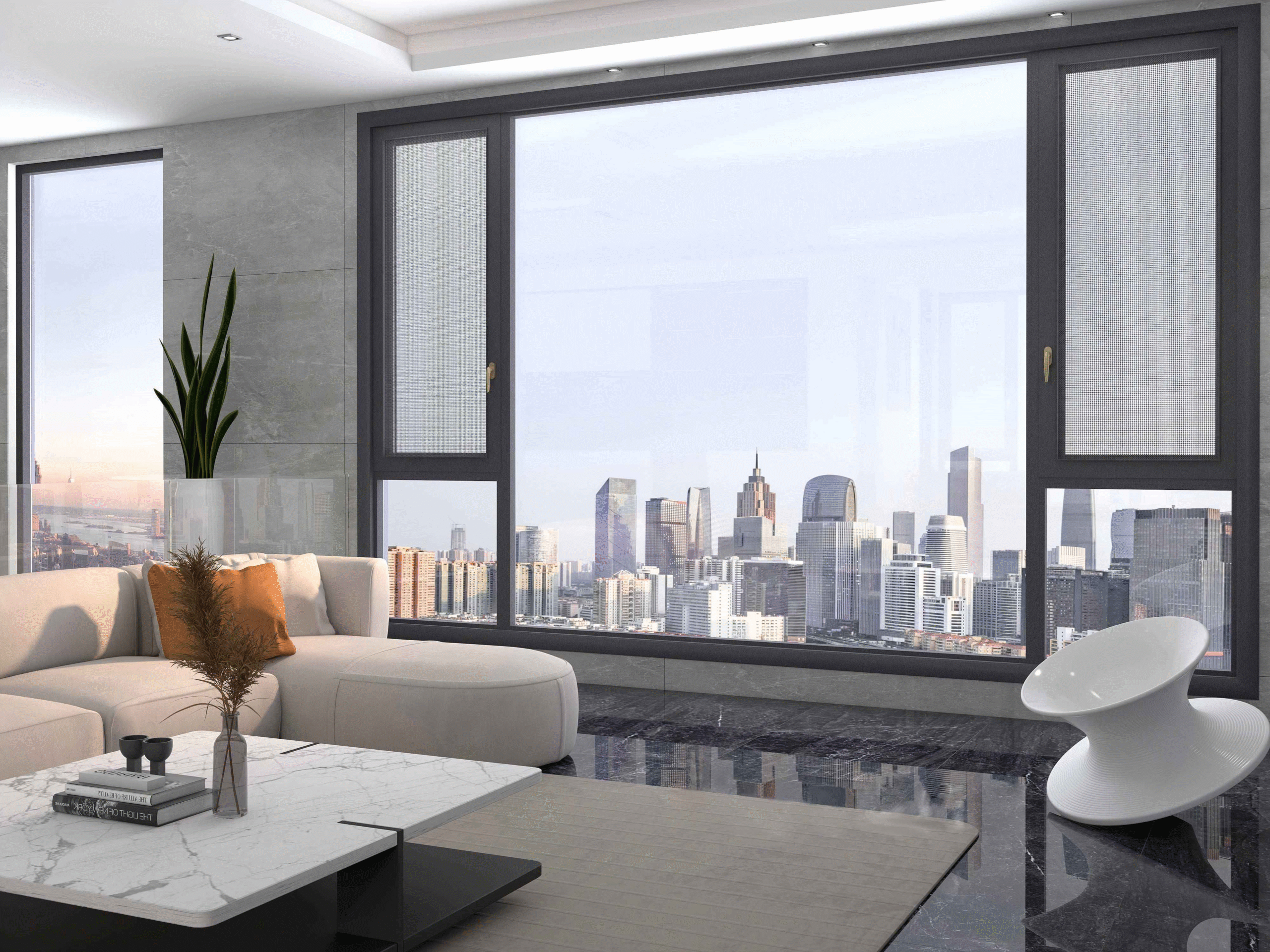
Secure Casement Windows: Top 3 Security Details for Projects
However, not all systems provide the same protection. At AlloyPro, we focus on engineering systems that balance sleek aesthetics with maximum safety. Here are the three critical security details that define a high-quality installation and help you build with confidence.
1. Advanced Multi-Point Locking Systems
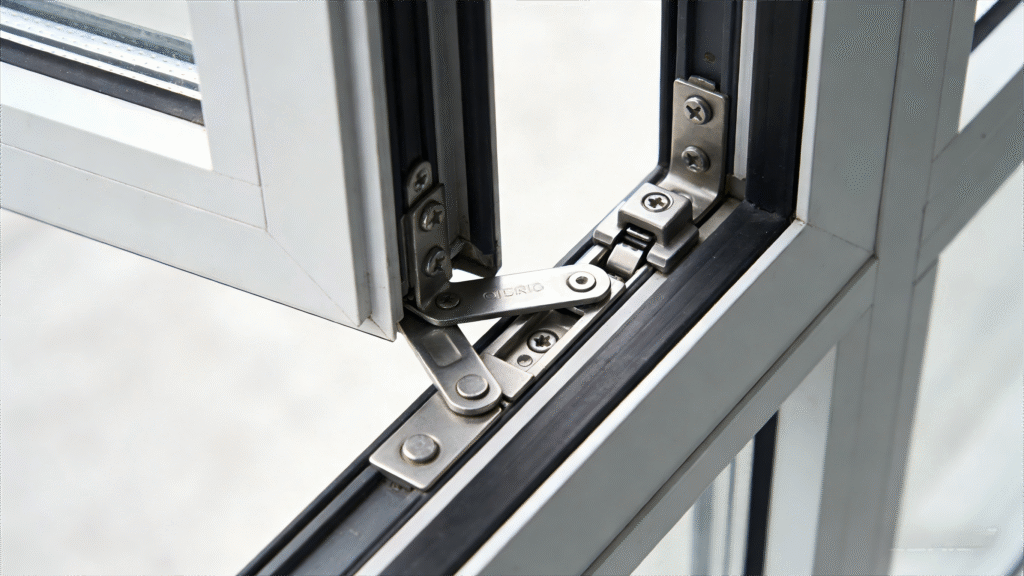
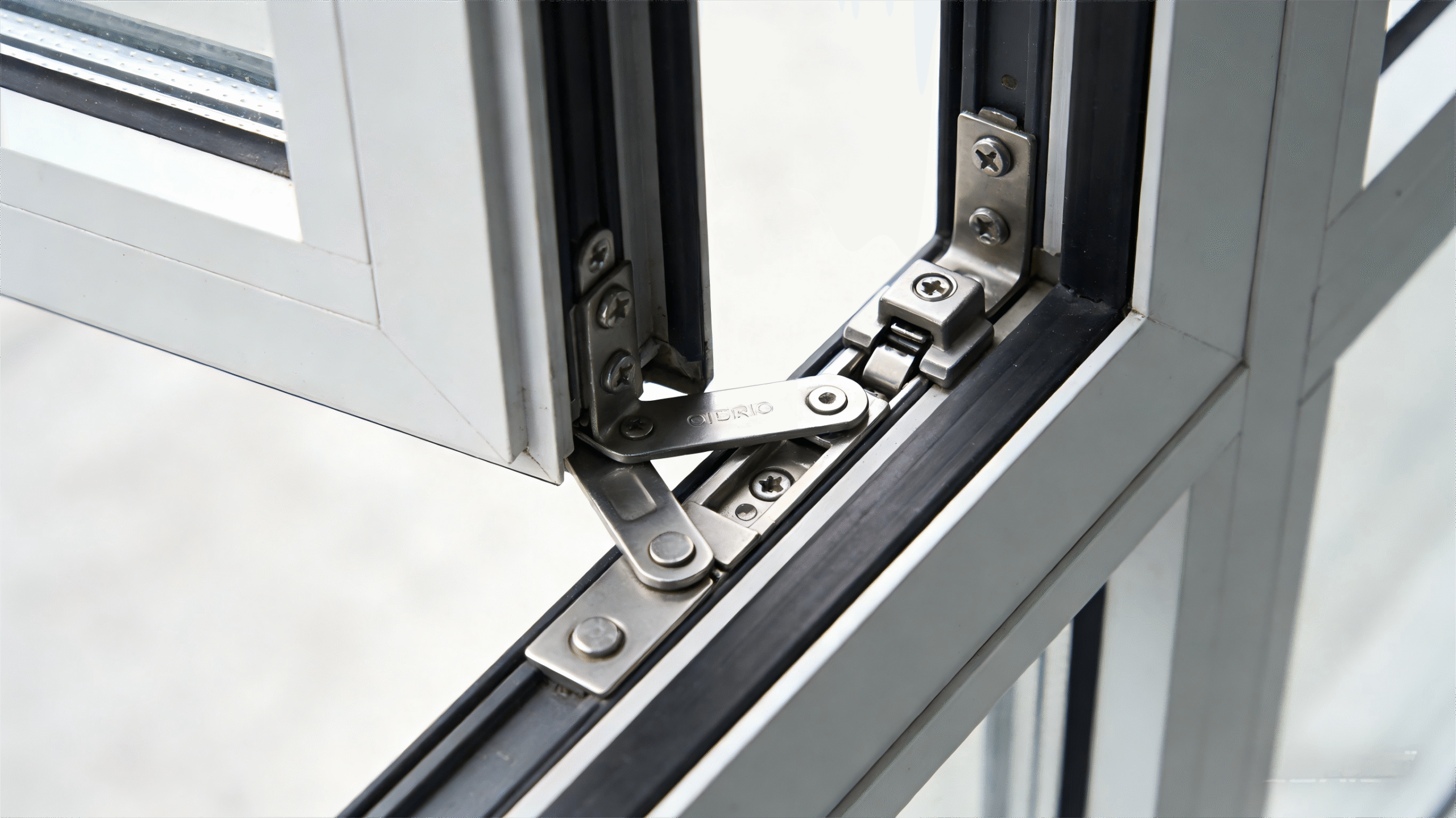
Standard windows often rely on a single latch. In contrast, high-performance secure casement windows use multi-point locking mechanisms. This system secures the window at several spots along the frame with just one handle turn.
Additionally, these locks pull the window sash tight against the frame seal. This creates a barrier that is both airtight and tamper-proof. For international buyers, ensuring your hardware meets global standards is essential. AlloyPro integrates premium locks that resist forced entry effectively, providing much-needed peace of mind for any project.
2. Structural Integrity of Aluminum Frames
The frame material dictates the overall strength of the window. While vinyl or wood might warp over time, high-grade aluminum remains rigid and stable. AlloyPro uses premium aluminum alloys that withstand extreme wind pressure and physical impact.
Furthermore, our thermal break technology does more than just save energy. It adds internal structural layers that make the frame harder to bend or break. When you choose a robust aluminum frame, you invest in a long-term security barrier. This durability is why modern contractors prefer our systems for luxury developments.
3. Impact-Resistant Glass Engineering
The glass is often the most vulnerable part of any building. To combat this, we utilize “Energy Efficient Glass Systems” that serve a dual purpose. These systems include tempered or laminated glass options designed for high-traffic environments.
Laminated glass, in particular, stays intact even if it cracks. This prevents intruders from gaining quick access to the interior. Moreover, the integration of these glass units into our precision-engineered frames ensures there are no weak gaps for prying tools. By combining strong glass with a secure frame, you create a complete safety solution.
Conclusion
Security in modern architecture requires attention to every detail. From multi-point locks to reinforced aluminum frames and impact-resistant glass, every element plays a vital role. Secure casement windows offer superior protection because their design inherently resists forced entry.
If you seek reliable, high-end window solutions, AlloyPro provides the expertise you need. Our systems prioritize your safety without compromising on minimalist design. Explore our collection today and see how we redefine security in modern glass systems.
Multi-Chamber vs. Single-Chamber: Does Structure Enhance Insulation?
Structural Comparison of Aluminum Window Sections
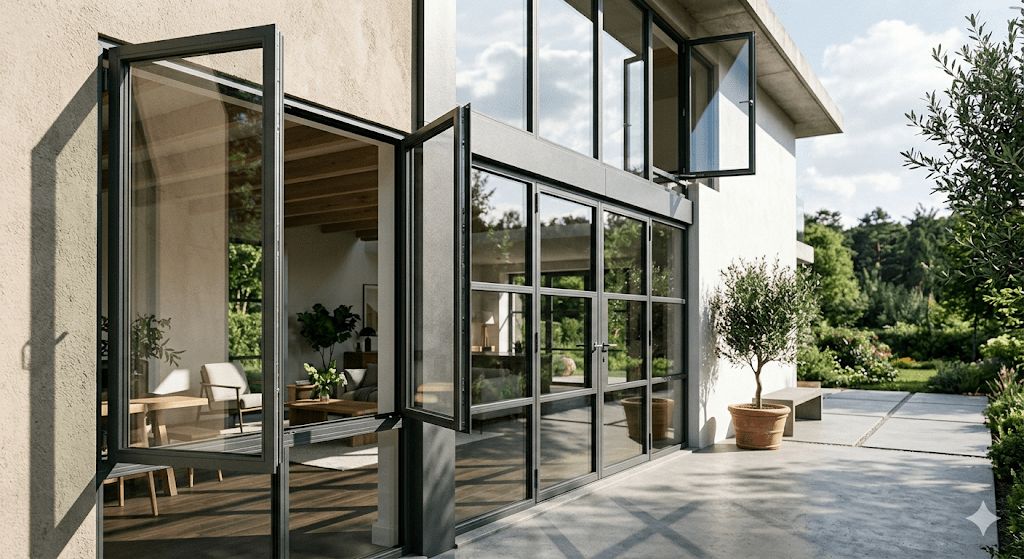
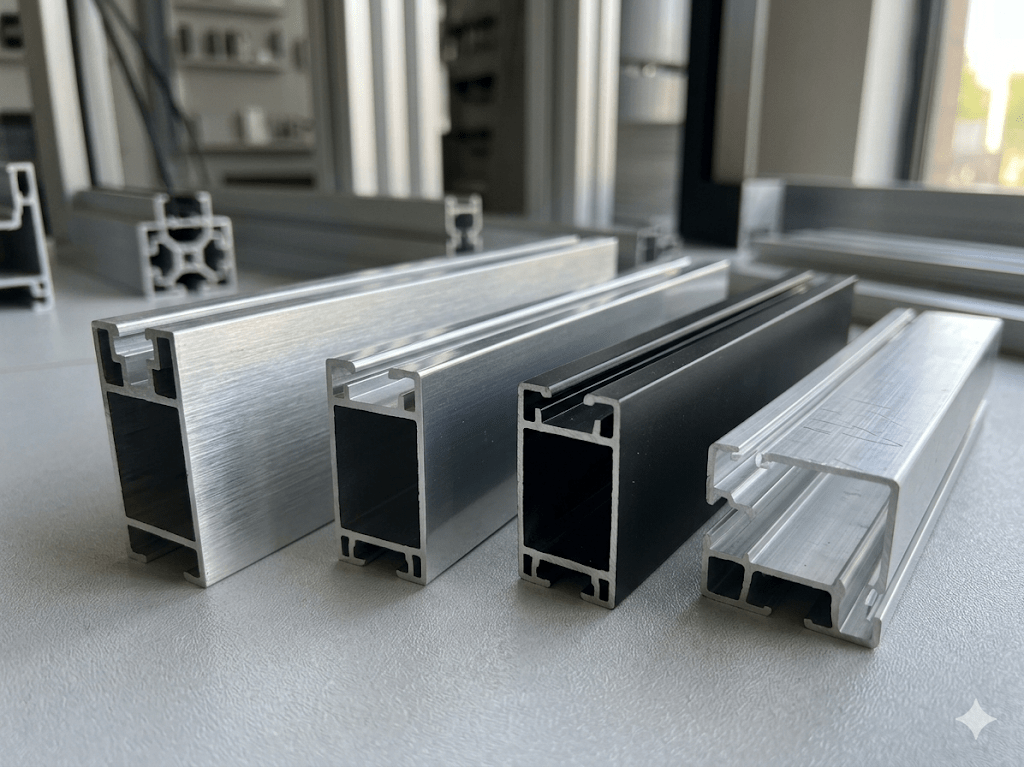
The fundamental difference lies in how air and energy move within the frame. A single-chamber design features one large open cavity. While it provides basic structural support and is cost-effective for simple applications, it allows heat and sound waves to pass through the metal profile with minimal resistance.
In contrast, multi-chamber Aluminum Window Sections utilize internal dividers to create a series of isolated air pockets. These chambers act as a natural buffer, slowing down thermal conduction. These internal ribs also provide additional “stiffness” to the profile, ensuring the frame remains stable under high wind pressure and physical stress.
Thermal Performance of Aluminum Window Sections
Aluminum is a natural conductor of heat. In a single-chamber approach, the large void does little to stop thermal transfer. High-performance Aluminum Window Sections solve this by combining a “thermal break” (a non-conductive barrier) with a multi-chamber geometry.
This combination effectively “traps” still air within the multiple small chambers. Since still air is an excellent insulator, this design significantly reduces the U-value of the window frame. For large-scale projects, this structural choice is the primary driver behind reduced electricity consumption and improved indoor climate control.
Acoustic Comfort: The “Sound Trap” Effect
Beyond temperature, the internal structure impacts urban noise reduction. A hollow, single-chamber frame can act like a drum, vibrating and potentially amplifying external noise.
Multi-chamber Aluminum Window Sections disrupt these sound vibrations through their reinforced internal walls. As noise attempts to travel through the frame, the sound waves hit multiple dividers, each reflecting and absorbing different frequencies. This “sound trap” effect provides a superior shield against traffic and construction noise, making it the standard for high-end residential and commercial interiors.
Conclusion: Engineering Success with AlloyPro
The choice between multi-chamber and single-chamber structures ultimately determines the longevity and comfort of a building. While single-chamber sections may suffice for basic needs, the next generation of architectural standards demands the precision of multi-chamber engineering.
As a specialist in high-performance building solutions, AlloyPro provides advanced Aluminum Window Sections from our manufacturing base in Guangdong. We combine rigorous structural testing with precision extrusion technology to ensure every profile delivers maximum insulation and durability. AlloyPro’s multi-chamber systems offer the reliable structural integrity your architectural projects deserve.
Commercial Aluminum Window: Casement vs Sliding Comparison
How Does Each Commercial Aluminum Window Type Operate?
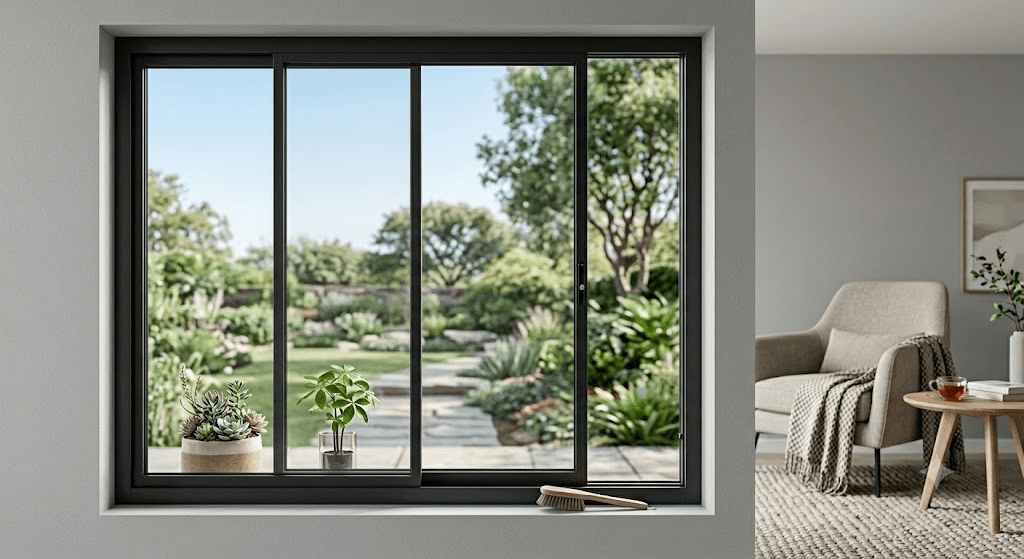
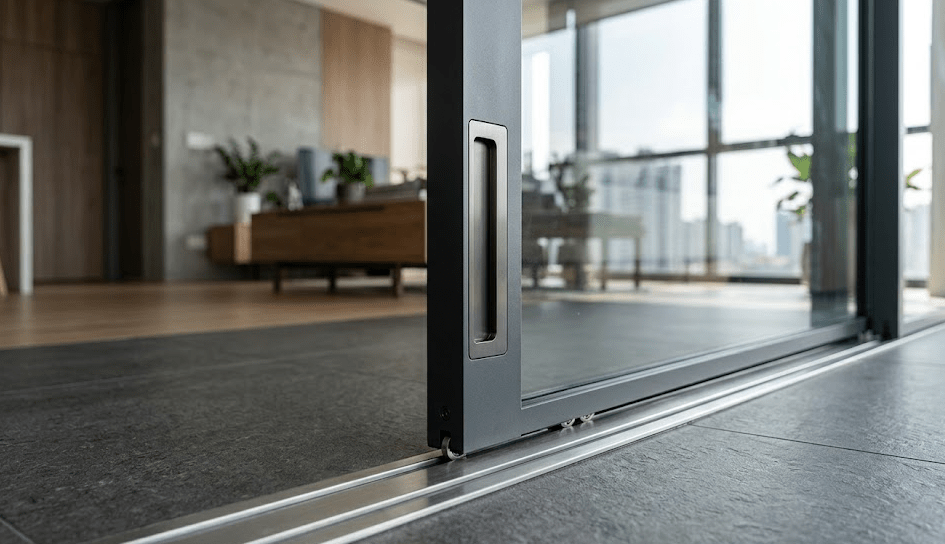
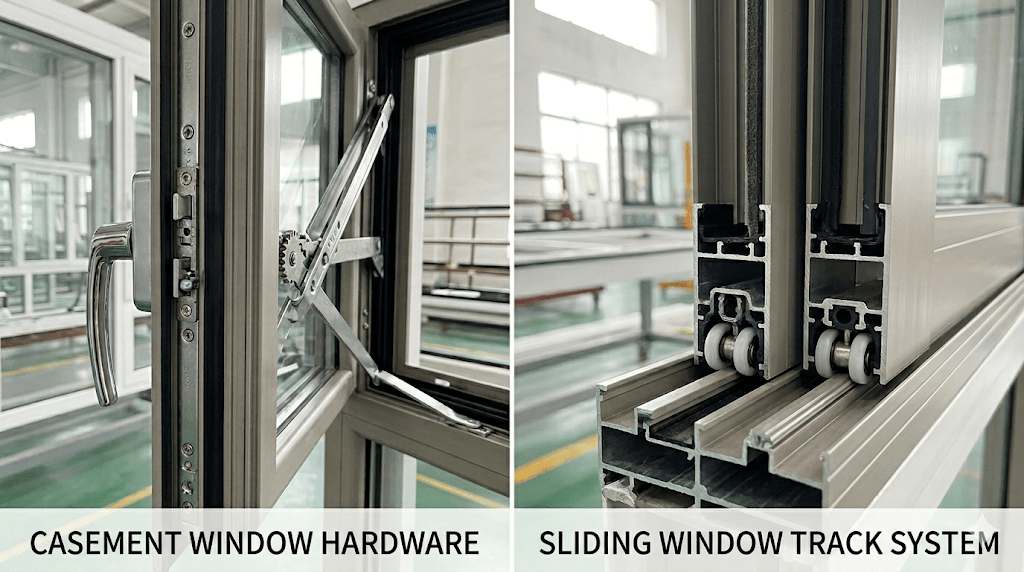
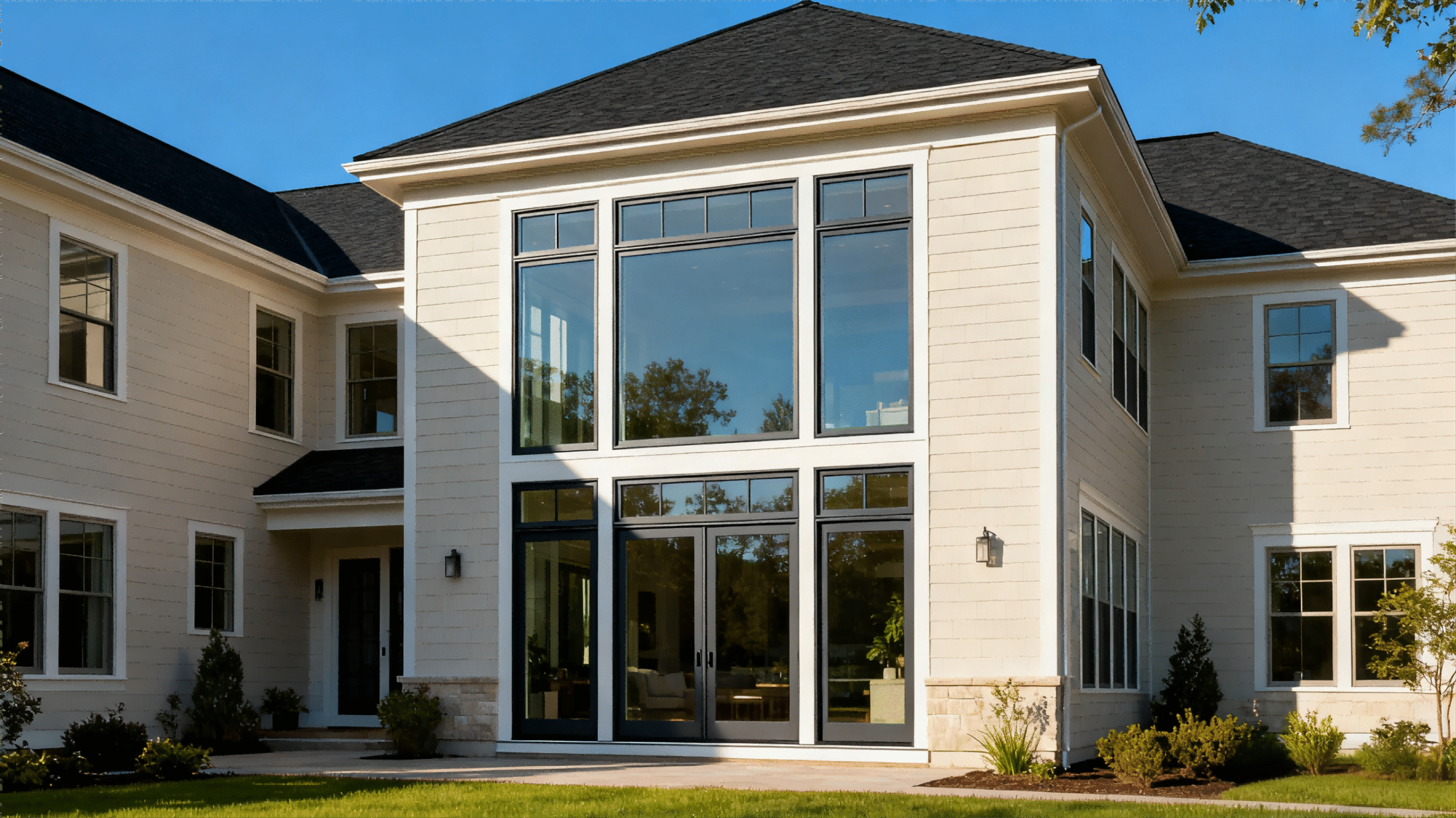
Each Commercial Aluminum Window type uses a different mechanical principle. Casement windows use side hinges to swing outward like a door. This design allows the entire window to open, which helps move more air. In contrast, sliding windows move sideways along a track. This mechanism saves space because the sash does not stick out inside or outside.
Furthermore, your project layout often decides the best choice. Sliding windows work well for walkways or patios where space is tight. Meanwhile, casement windows fit perfectly on angled walls where you want to catch side breezes for natural cooling.
Energy Standards for Your Commercial Aluminum Window
When you evaluate Energy Efficient Windows, both designs meet different goals. Casement windows use a compression seal. When you lock them, the sash presses tight against the frame. This creates a strong barrier against wind and rain. This makes them a great choice for high-rise projects.
Additionally, AlloyPro offers high-capacity sliding systems with thermal break technology. A sliding Commercial Aluminum Window provides large, clear views. They can hold much bigger glass panels than a hinged window. For projects that need a “wall of glass” look, sliding Aluminum Windows for Projects offer a smart and practical solution.
Security Features of a Commercial Aluminum Window
Security is a top priority for every Commercial Aluminum Window. Casement designs use multi-point locks built into the frame for strong protection. On the other hand, modern sliding Aluminum Windows for Projects use reinforced latches. These provide reliable security for commercial buildings.
Furthermore, the life of your Commercial Aluminum Window depends on the metal quality. AlloyPro uses premium 6063-T5 aluminum to ensure both window types resist rust. Whether you pick a casement or a sliding system, choosing the right materials is essential for Energy Efficient Windows.
Finding the Best Commercial Aluminum Window Solution
Ultimately, the best window is the one that fits your project goals. If you need maximum air tightness and a classic style, casement Energy Efficient Windows are a smart investment. They work very well for projects that need to block outside noise.
However, if your project needs a modern look and easy operation for large openings, a sliding Commercial Aluminum Window is the best fit. At AlloyPro, we offer many Aluminum Windows for Projects that meet international standards like AS2047. Contact our team today to explore our solutions and ensure high quality for your build.
PVDF vs Powder Coating for Coastal Aluminum Projects
What is Powder Coating Technology?
Powder coating is a highly popular dry finishing process. Therefore, we apply a thermoplastic powder to the raw aluminum surface. Thus, we cure it under high heat completely. This process creates a very tough and hard finish. Moreover, it offers a vast range of beautiful custom colors. However, standard powder coatings struggle with heavy salt concentrations. Ultimately, coastal areas require a far more robust surface treatment.
PVDF vs Powder Coating: The Fluorocarbon Edge
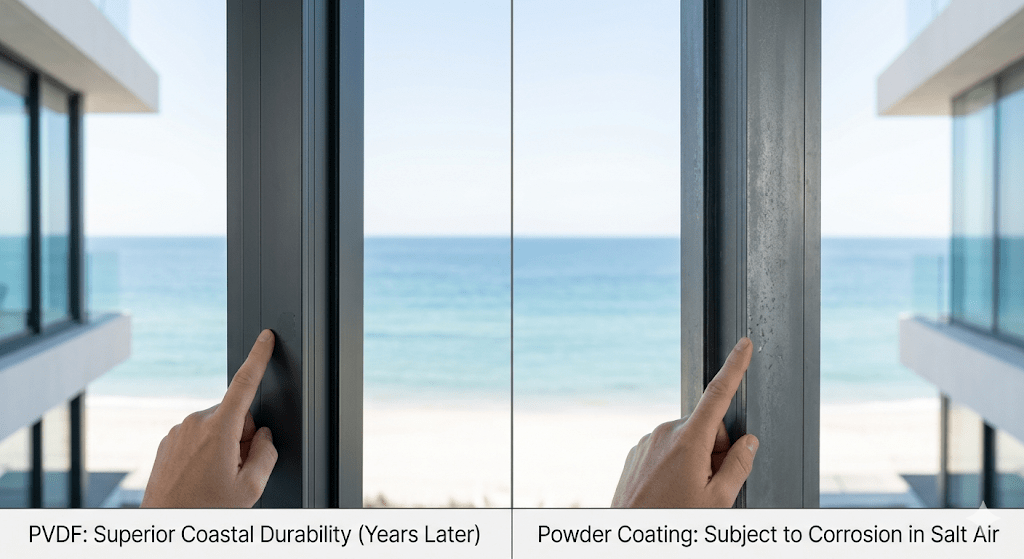
PVDF is a premium resin-based liquid coating system. Therefore, it contains highly stable fluorine atoms always. This creates an incredibly strong chemical bond perfectly. In the PVDF vs Powder Coating comparison, PVDF wins easily. It actively resists intense chemical weathering and salt-air environments. Additionally, these fantastic finishes feature brilliant self-cleaning properties. Thus, they resist ugly chalking and fading completely. Ultimately, PVDF provides a superior barrier against corrosive chloride ions.
PVDF vs Powder Coating: Maintenance and Durability
The lifespan difference is truly significant in coastal environments. When analyzing PVDF vs Powder Coating, PVDF lasts much longer. Therefore, PVDF finishes maintain their color for over 20 years. Powder coatings may show fading in salty air sooner. Furthermore, ongoing maintenance requirements vary between the two options. PVDF surfaces stay incredibly clean for much longer periods. Consequently, slick surfaces repel harmful dust and salt effortlessly. Ultimately, textured powder coatings might require frequent costly rinsing.
Conclusion on PVDF vs Powder Coating Choices
The final decision depends on your specific project location. Inland buildings benefit from cost-effective powder coating applications greatly. However, seaside sites require premium PVDF finishes absolutely. The initial investment is slightly higher for your business. Thus, the long-term maintenance savings are truly substantial. At AlloyPro, we provide both high-quality professional options. Resolve your PVDF vs Powder Coating choice with our expert team. We ensure your aluminum profiles stand the ultimate test today.
Aluminum T5 vs. T6: 6063 Aluminum Temper Guide for Projects
Why the Choice of Aluminum T5 vs T6 Matters
The “temper” of an alloy defines its soul. While the chemical composition of 6063 remains the same, the thermal processing creates two entirely different materials. Choosing between Aluminum T5 vs T6 impacts not only the structural integrity of your building but also the long-term cost and aesthetic durability of the installation. Furthermore, failing to specify the correct temper can lead to unexpected material deformation during fabrication.
Decoding the 6063 Aluminum Temper Guide: Cooling Processes
To understand the performance gap, we must look at the production line. In this 6063 Aluminum Temper Guide, we distinguish the two states by their cooling intensity:
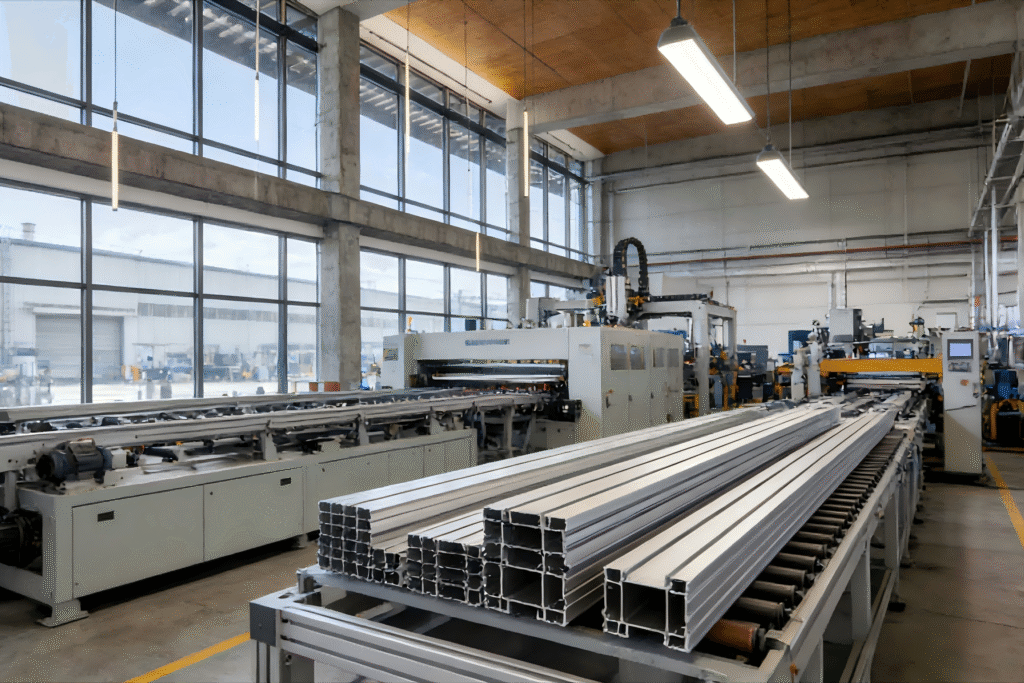
- T5 Tempering: We cool the aluminum profiles quickly using air or water fans immediately after they exit the extrusion die. Following this, the metal undergoes “artificial aging” in a specialized oven. This process stabilizes the metal while maintaining its natural surface smoothness.
- T6 Tempering: This is a more aggressive two-stage process. We perform “solution heat treatment” followed by rapid quenching in a water bath. This process creates a much denser molecular structure. Consequently, T6 profiles achieve significantly higher mechanical ratings.
Comparing Mechanical Aluminum Strength and Hardness
When analyzing Aluminum Strength and Hardness, structural requirements are the primary driver. In many heavy-duty industrial applications, the difference is non-negotiable.
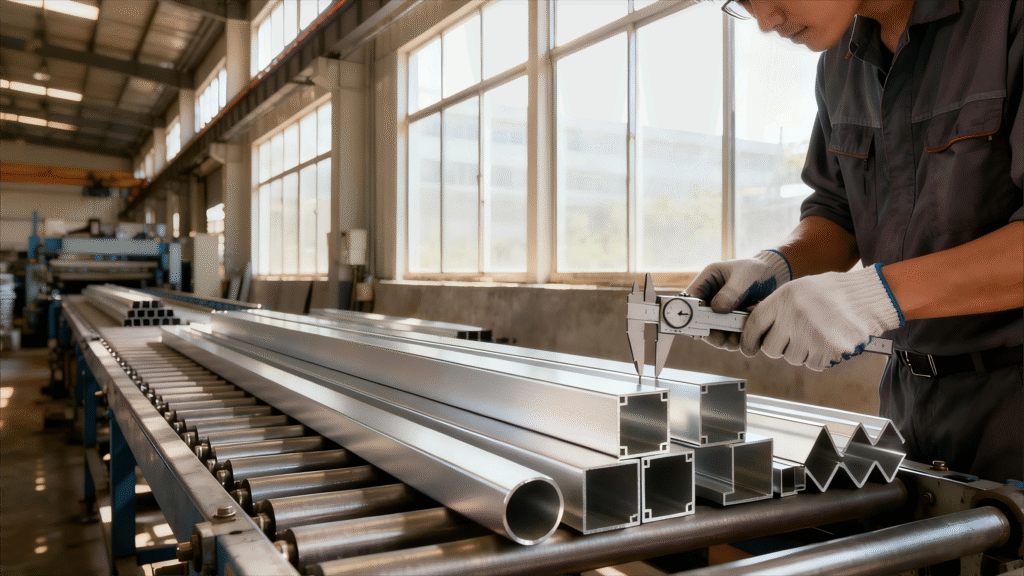
- Yield Strength and Tension: T6 temper typically offers a 30% to 50% increase in yield strength compared to T5. If your project involves high-rise curtain walls or heavy machinery frames, T6 provides the necessary safety margin.
- Surface Hardness: According to standard measurements, T6 reaches higher hardness levels on the Webster scale. However, this increased Aluminum Strength and Hardness makes the metal more brittle. In contrast, T5 maintains enough ductility for complex secondary operations like bending or punching without cracking.
Enhancing Custom Aluminum Profiles with Superior Aesthetics
Your choice of Aluminum T5 vs T6 also dictates the visual success of your project. Because the T5 cooling process is less traumatic for the metal, it avoids the micro-warping that can occur during T6 quenching.
As a result, T5 is the premier choice for Custom Aluminum Profiles that require high-quality surface treatments. Whether you choose powder coating, PVDF, or fine anodizing, T5 provides a more consistent “mirror-like” finish. Furthermore, the smoother grain structure of T5 allows for better color uniformity across large batches, which is essential for modern minimalist architectural designs.
Conclusion: Trust AlloyPro for Your Custom Aluminum Profiles
In summary, your project’s unique demands should dictate the temper. If you prioritize structural Aluminum Strength and Hardness, T6 is your best investment. However, for most architectural designs, the T5 temper offers the perfect harmony of beauty, workability, and value.
As a professional manufacturer based in Guangdong, AlloyPro specializes in high-precision Custom Aluminum Profiles. We operate state-of-the-art extrusion lines and advanced aging ovens to ensure every batch follows our strict 6063 Aluminum Temper Guide. Our team provides full technical support, from mold design and alloy selection to specialized surface treatments that meet international standards.
Whether you are developing high-performance window systems or complex industrial frameworks, AlloyPro ensures consistency, durability, and competitive lead times. Contact our engineering team today to discuss your project requirements and let us help you select the perfect Aluminum T5 vs T6 solution for your success.