






Adress

Guangdong, China

Email

postmaster@alloypro.net

Understanding U-Value: How to Choose Energy Efficient Aluminum Windows

When you browse the AlloyPro catalog, you often see the term Low U-Value Windows. In simple terms, the U-value measures how much heat passes through a window. A lower number means better insulation for your home or office.

Consequently, choosing windows with a low U-value is no longer just an option. It is a smart way to lower your energy costs. Moreover, modern building codes now require high-performance materials to protect the environment.

Understanding Thermal Break Window Insulation

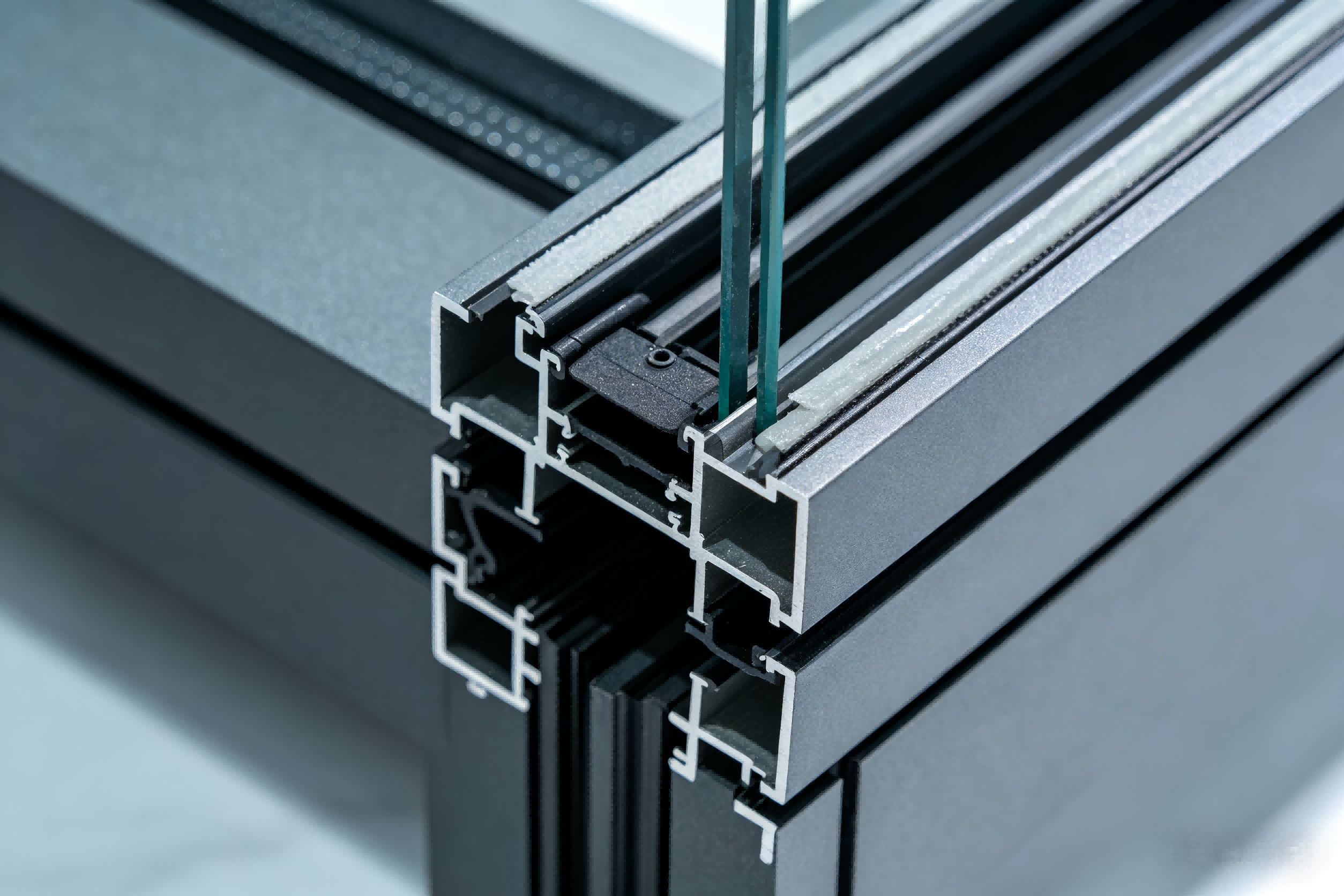
The science of insulation relies on blocking heat transfer. Standard aluminum frames usually conduct heat quickly. However, AlloyPro uses advanced Thermal Break Window Insulation to solve this problem.

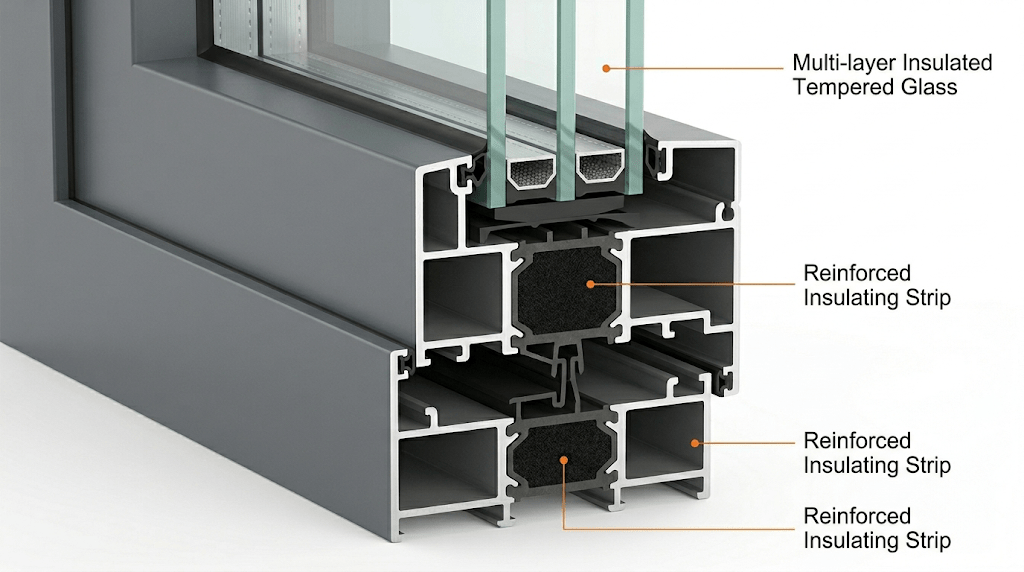
We insert a reinforced polyamide strip inside the aluminum profile. This creates a strong barrier. Additionally, this design ensures that Low U-Value Windows keep your rooms warm in winter and cool in summer. Therefore, you get a more stable indoor climate all year round.

Key Features of Energy Efficient Aluminum Windows

To achieve a high rating, several parts must work together perfectly. Our Energy Efficient Aluminum Windows focus on three main areas:

  • Premium Glazing: We use double or triple glass with Low-E coatings. These layers reflect heat while letting in natural light.
  • Multi-Chamber Frames: Our profiles have complex internal structures. These chambers trap air to improve the performance of Low U-Value Windows.
  • Professional Seals: High-quality EPDM gaskets prevent air leaks. As a result, your window maintains its insulation power for decades.
How to Identify Quality Low U-Value Windows

When you compare suppliers, you must check the technical details carefully. Some companies only show the “Center of Glass” value ($U_g$). However, this can be misleading.

In contrast, professional buyers always look for the Whole Window U-value ($U_w$). At AlloyPro, we provide full test reports for our Low U-Value Windows. This transparency helps you meet international standards like CE or AS2047 without any stress.

Benefits of Installing Low U-Value Windows

Investing in high-quality systems brings many long-term rewards. Specifically, Low U-Value Windows offer the following advantages:

  1. Lower Utility Bills: You will use less HVAC power. Consequently, your monthly energy expenses will drop significantly.
  2. Less Noise Pollution: Better insulation also means better soundproofing. In addition, your living space will become much quieter.
  3. No More Condensation: High-performance frames stay warmer. Therefore, you will not see moisture buildup on the glass during cold nights.

Contact AlloyPro for Your Next Project

Choosing the right Low U-Value Windows is the best way to improve your building’s value. At AlloyPro, we combine modern style with elite thermal technology.

Are you ready to upgrade your windows? Visit our product page or contact our team for a custom quote today. Let us help you build a more comfortable and sustainable future.

Reliable China Aluminum Profile Supplier: 2026 Pricing Guide

In a volatile 2026 market, securing your project’s financial health is more critical than ever. This guide explores how a professional China Aluminum Profile Supplier uses strategic framework agreements to protect international buyers from sudden price spikes and supply chain disruptions.

Market Outlook: The 2026 Aluminum Volatility

The global aluminum market faces significant volatility in 2026. Fluctuating energy costs and shifting trade policies create uncertainty for construction and industrial projects. For international buyers, these rapid price swings can quickly erode profit margins. However, finding a Reliable China Aluminum Profile Supplier is the first step toward maintaining budget stability.

At AlloyPro, we observe that successful partners prioritize long-term certainty over short-term spot market gambles. Understanding why prices move is the first step toward securing your project’s financial health.

Why Prices Fluctuate

Multiple factors drive the current price trends. Global demand for green building materials continues to rise. Additionally, supply chain disruptions in raw bauxite impact smelting costs. These variables mean that a quote today might expire by tomorrow.

In contrast to previous years, the 2026 market demands more than just a standard purchase order. As a leading China Aluminum Profile Supplier, we help you lock in 2026 costs. Buyers need a mechanism that protects them from sudden inflation while ensuring a steady flow of high-quality materials.

The Power of Framework Agreements

A framework agreement is a long-term partnership between a buyer and an Aluminum Profile Supplier. Unlike a one-off contract, this agreement sets out the terms, quality standards, and pricing formulas for a set period. Furthermore, it allows you to reserve production capacity in our Guangdong facility without committing to the full payment upfront.

This approach offers peace of mind. When you sign a framework agreement, you essentially “fence in” your costs. Even if the global LME price jumps, your project stays on budget because your pricing logic is already locked.

Strategies to Lock in Costs

How exactly can you use these agreements to your advantage? First, we recommend establishing a “price ceiling” to ensure you never pay above a certain limit. Second, consider “volume-based pricing.” By committing to a total annual tonnage, you gain access to lower base rates that spot buyers cannot reach.

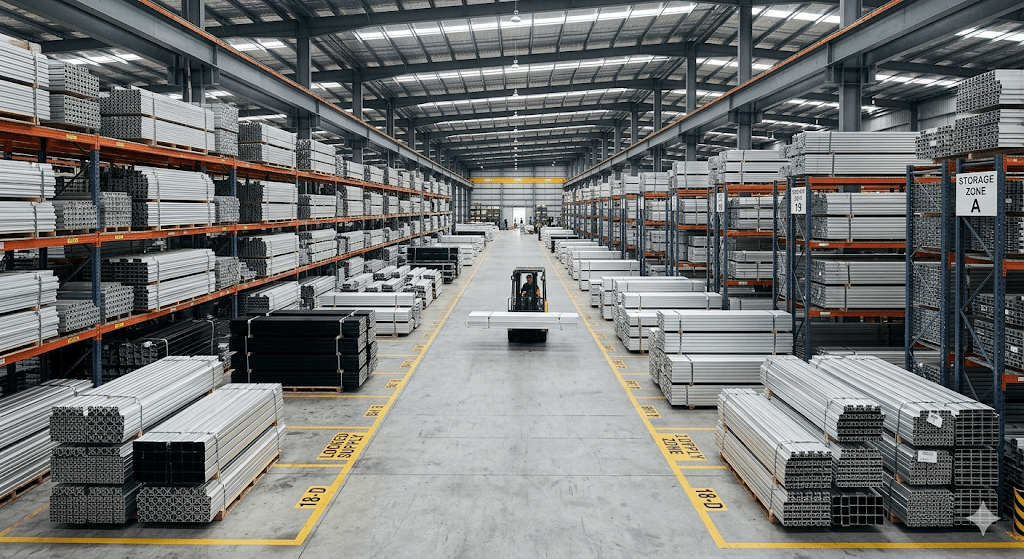
Additionally, AlloyPro helps clients by managing “safety stock.” As your dedicated China Aluminum Profile Supplier, we produce and store your specific profiles ahead of time. This physical hedging strategy is often more effective than financial hedging alone.

Consistency and Reliability

Beyond price, reliability is the true currency of 2026. A framework agreement transforms the vendor-buyer relationship into a strategic alliance. Therefore, you avoid the long lead times that often plague the industry during high-demand months. Consistent quality is another major benefit. Since the technical specifications are fixed in the agreement, every batch of 6063-T5 aluminum you receive meets the exact same high standards.

Secure Your Budget with AlloyPro

Navigating the 2026 aluminum market requires a proactive partner. Our team in Guangdong understands the complexities of international logistics and price hedging. We invite you to review your upcoming project requirements and discuss a tailored framework strategy with us.

As a leading China Aluminum Profile Supplier, we help you lock in 2026 costs. Explore framework contracts for high-quality thermal break and 6063-T5 profiles by visiting alloypro.net today.

Double Glazed Soundproof Glass vs Single Pane Windows

Noise pollution remains a major challenge for modern urban living today. Therefore, choosing double glazed soundproof glass is essential for ultimate comfort. Whether it is traffic sounds or construction noise, a quiet home environment is vital. Many homeowners ask a critical question when upgrading their windows constantly. Should I choose single glass or premium acoustic glass for better noise reduction? Ultimately, the right choice transforms your daily living experience.

Sound Transmission and Double Glazed Soundproof Glass

Sound travels in continuous invisible waves through the air easily. When these waves hit a window, the glass vibrates instantly. Thinner single-pane glass vibrates very easily and quickly. Consequently, most street noise passes through it without much resistance. If you live near a busy road, single glass fails completely.

In contrast, double glazed soundproof glass uses a completely different strategy. It consists of two glass panes separated by a spacer. Thus, this structure acts as a powerful acoustic buffer. Furthermore, it significantly reduces the energy of passing sound waves. This makes double glazing far superior for acoustic comfort.

The Power of Double Glazed Soundproof Glass

Premium double glazed soundproof glass provides a robust barrier against external noise. The air gap between the panes plays a vital role always. Since sound travels differently through glass and air, the medium change disrupts sound waves. Additionally, using tempered glass adds incredible safety to the window system.

At AlloyPro, we specialize in high-performance aluminum window systems. Our units use precision engineering to maximize sound dampening perfectly. Moreover, we ensure that every unit features a perfect seal. A poor seal allows sound to leak through effortlessly. Therefore, the aluminum frame quality is just as important.

Key Benefits of Double Glazed Soundproof Glass

While sound insulation is a priority, absolute safety is equally important. Tempered glass is much stronger than regular standard glass. If it breaks, it crumbles into small blunt pieces safely. Furthermore, it handles extreme daily temperature changes much better. This durability ensures your double glazed soundproof glass remains highly effective for decades.

  • Noise Reduction: Significant noise reduction by 35dB for quiet homes.
  • Thermal Insulation: Enhanced thermal insulation for much lower energy bills.
  • Superior Safety: Extreme safety with high-grade tempered glass materials.
  • Perfect Sealing: Airtight sealing with precision-fit aluminum profiles.

Choosing the Best Noise Reduction Window

If your project requires a truly quiet environment, this premium glass is the clear winner. It offers a peaceful atmosphere while improving energy efficiency significantly. Although the initial cost is higher, the long-term benefits are substantial.

You save money on heating and enjoy a higher quality of life. Visit our official website at alloypro.net today. Explore our range of high-performance aluminum profiles and window systems. We provide customized solutions tailored to your specific acoustic needs.

How to Choose the Best Window Glass for Office and Home

Selecting the Best Window Glass is the most critical decision for any modern construction project. Whether you are managing complex Office Building Glazing or upgrading a private residence, the glass choice determines the building’s soul. Since glass covers over 80% of a window’s surface, it directly impacts energy bills, acoustic comfort, and safety. However, the requirements for a professional workspace and a cozy home differ significantly.

In this guide, we provide essential Glass Selection Tips to help you identify Energy Saving Windows that suit your specific needs. By understanding these technical nuances, you can ensure a high-performance result that lasts for decades.

Office Building Glazing: Prioritizing Performance

Commercial spaces usually feature expansive glass facades to create a professional atmosphere. Therefore, Office Building Glazing must prioritize solar heat control and natural light transmission. If the glass allows too much heat inside, air conditioning costs will skyrocket. Conversely, if the glass is too dark, it reduces productivity.

To achieve the perfect balance, many architects now choose Double Silver Low-E glass. This technology reflects infrared radiation while allowing visible light to pass through. Additionally, large-scale Office Building Glazing requires high structural integrity to withstand wind pressure at higher altitudes.

Residential Needs: Comfort and Insulation

In contrast, residential projects focus more on creating a quiet, thermally stable sanctuary. Homeowners prioritize thermal insulation to keep living spaces warm in winter and cool in summer. For these projects, finding the Best Window Glass means looking for a low U-value.

Furthermore, acoustic comfort is a top priority for homes in urban areas. Standard single-pane glass fails to block street noise effectively. Instead, installing Energy Saving Windows with double or triple glazing creates a much-needed sound barrier. This ensures that your family enjoys a peaceful environment, regardless of the noise outside.

Professional Glass Selection Tips

Navigating technical specifications can be overwhelming. Follow these Glass Selection Tips to simplify your decision:

  • Check the U-Value: A lower U-value indicates better insulation, which is vital for Energy Saving Windows.
  • Evaluate the SHGC: This measures how much solar heat enters; lower values are better for hot climates.
  • Consider Laminated Options: For residential windows, laminated glass offers superior security against break-ins.
  • Match the Frame: Ensure your glass choice complements high-quality aluminum profiles, like those from AlloyPro, to prevent thermal bridging.

Conclusion

Making the right choice requires a deep understanding of architectural glass technology. From initial Office Building Glazing design to final residential installation, every detail matters. At AlloyPro, we integrate premium aluminum systems with the Best Window Glass to deliver unparalleled results. Explore our latest projects and discover how our Glass Selection Tips can transform your next building venture.

Aluminum vs Vinyl Windows: Why is Aluminum Superior to uPVC?

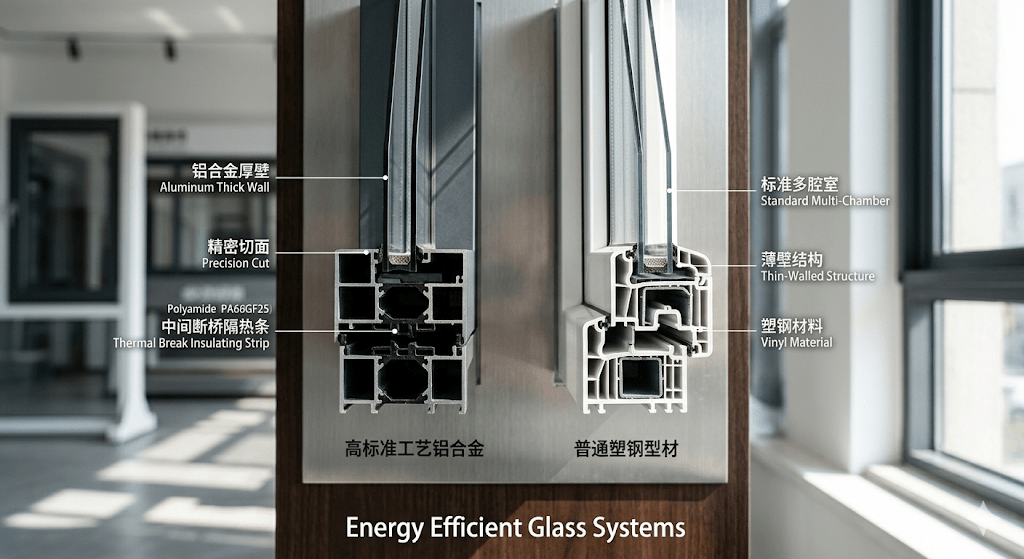
Why is Aluminum Superior to other building materials? As global construction shifts toward eco-friendly solutions, Thermal Break Aluminum Windows lead the industry in performance. Our Energy Efficient Glass Systems consistently outperform Aluminum vs Vinyl Windows in durability and structural strength for every high-end project.

1. The Power of the Circular Economy

Aluminum is the “green metal.” To begin with, it is 100% recyclable. In addition, recycling aluminum consumes only 5% of the energy compared to primary production. Unlike wood that decays or uPVC that loses quality, aluminum stays strong forever. Therefore, by choosing alloypro.net, you support a sustainable economy. Consequently, this choice lowers the carbon footprint of your entire project.

2. Maximum Energy Savings with Thermal Breaks

Modern technology has solved the insulation problem. For example, our Thermal Break Aluminum Windows use reinforced strips to stop heat transfer. As a result, this innovation keeps buildings cool in summer and warm in winter.

In contrast, wood frames often warp and leak air. Similarly, when architects evaluate Aluminum vs Vinyl Windows, they find that vinyl can expand and fail. Because our systems are precise, they reduce the load on HVAC units. Accordingly, owners enjoy massive energy savings and better comfort.

3. Unmatched Durability in Extreme Environments

Sustainability requires longevity. Most importantly, a material is not eco-friendly if you must replace it often. For instance, wood is vulnerable to rot and moisture. In the same way, uPVC often becomes brittle under the sun.

However, aluminum with PVDF coating resists corrosion effortlessly. Whether your project is in a coastal region or a desert, AlloyPro systems stay strong. Since they last over 30 years, they ensure zero heavy maintenance costs. Thus, aluminum remains the premier Sustainable Architecture Material.

4. Slim Design and Natural Daylighting

Architects favor aluminum for its strength. Because it is strong, it allows for Slim Line designs with huge glass panes. Consequently, larger windows maximize natural daylight. Therefore, they reduce the need for electric lighting.

While wood requires thick frames, aluminum stays sleek. Moreover, it delivers a minimalist look without sacrificing safety. It creates a seamless connection to the outdoors. This is a hallmark of modern sustainable design.

5. Low Maintenance for Long-Term Benefits

Maintaining a building consumes resources. For example, wood requires regular sanding and toxic treatments. In contrast, aluminum is virtually maintenance-free. Specifically, a simple cleaning with water is usually enough to keep frames looking new.

Furthermore, the stability of aluminum ensures that doors do not jam. This reliability is essential for international buyers. It ensures that the Energy Efficient Glass Systems perform well for decades. As a result, they far outlast standard vinyl options.

Conclusion: A Future-Proof Investment

In conclusion, aluminum outperforms both vinyl and wood in every way. It offers better recycling, strength, and energy efficiency. Therefore, it is a long-term investment for the planet. Visit alloypro.net to explore our solutions and build a greener future today.

Secure Casement Windows: Top 3 Security Details for Projects

When planning high-end residential or commercial developments, secure casement windows are among the most reliable options to ensure building safety. Many architects and homeowners ask: “Are casement windows truly safe?” The short answer is yes. In fact, their unique engineering makes them nearly impossible to pry open from the outside.

However, not all systems provide the same protection. At AlloyPro, we focus on engineering systems that balance sleek aesthetics with maximum safety. Here are the three critical security details that define a high-quality installation and help you build with confidence.

1. Advanced Multi-Point Locking Systems

Standard windows often rely on a single latch. In contrast, high-performance secure casement windows use multi-point locking mechanisms. This system secures the window at several spots along the frame with just one handle turn.

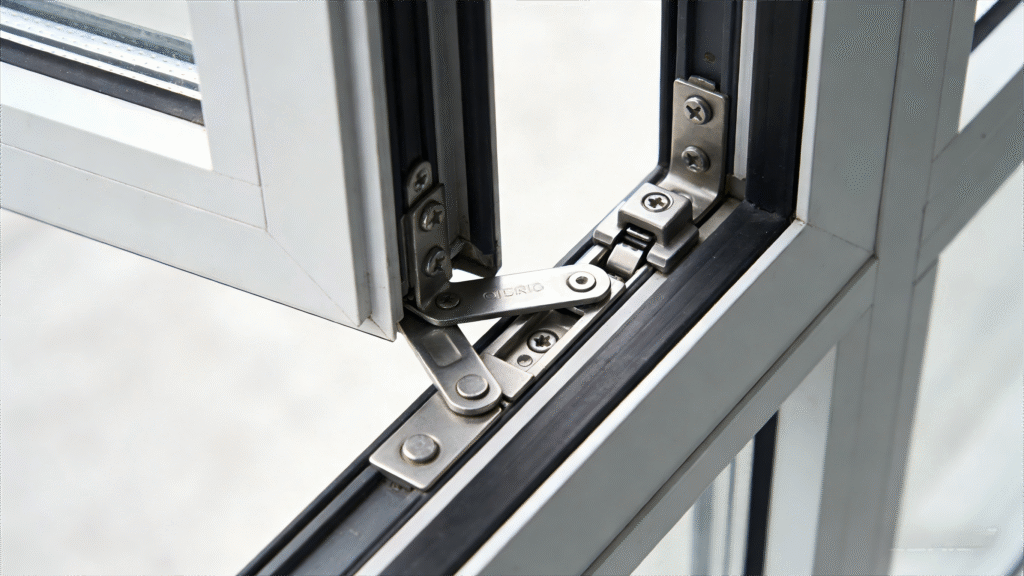
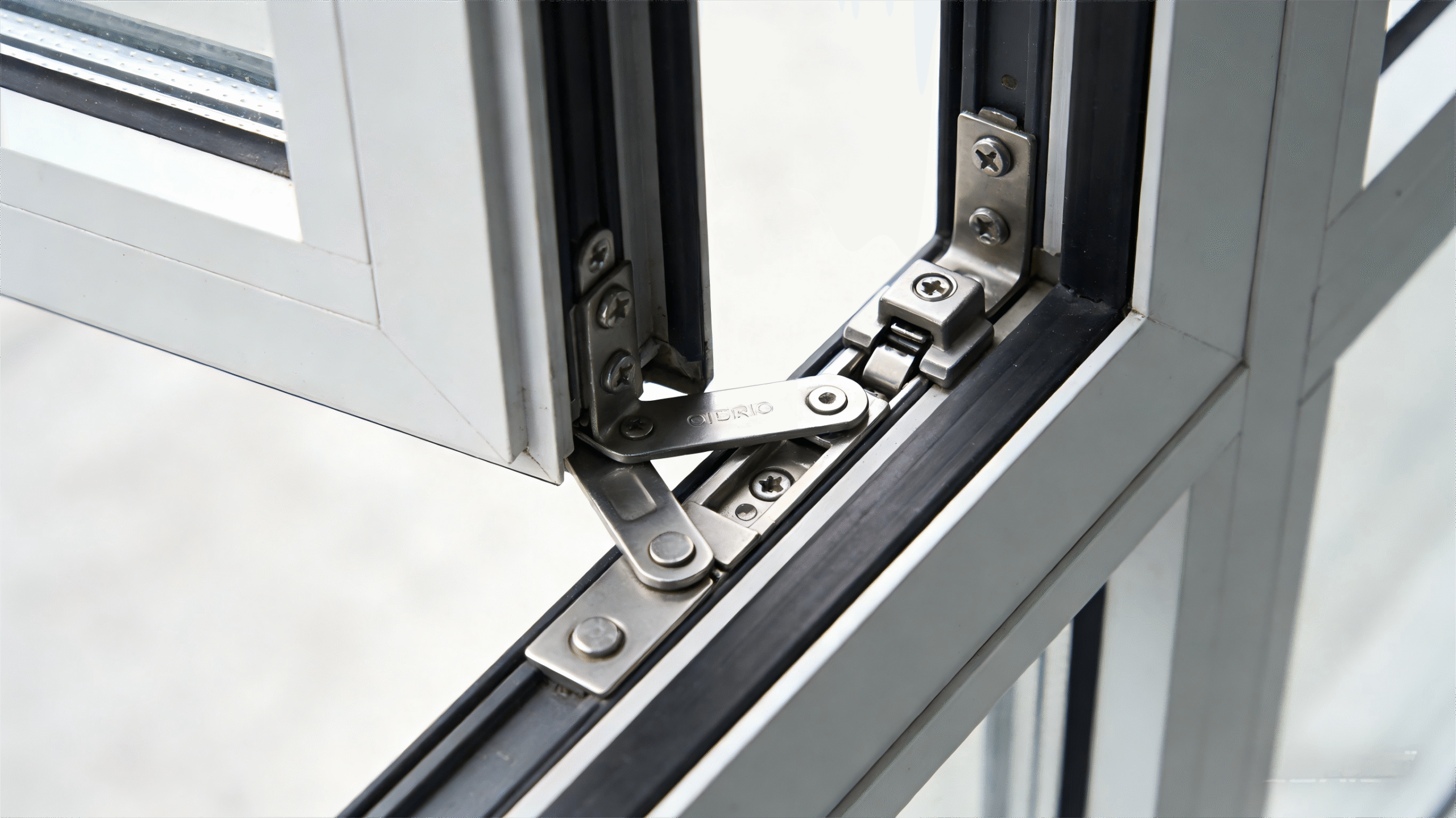
Additionally, these locks pull the window sash tight against the frame seal. This creates a barrier that is both airtight and tamper-proof. For international buyers, ensuring your hardware meets global standards is essential. AlloyPro integrates premium locks that resist forced entry effectively, providing much-needed peace of mind for any project.

2. Structural Integrity of Aluminum Frames

The frame material dictates the overall strength of the window. While vinyl or wood might warp over time, high-grade aluminum remains rigid and stable. AlloyPro uses premium aluminum alloys that withstand extreme wind pressure and physical impact.

Furthermore, our thermal break technology does more than just save energy. It adds internal structural layers that make the frame harder to bend or break. When you choose a robust aluminum frame, you invest in a long-term security barrier. This durability is why modern contractors prefer our systems for luxury developments.

3. Impact-Resistant Glass Engineering

The glass is often the most vulnerable part of any building. To combat this, we utilize “Energy Efficient Glass Systems” that serve a dual purpose. These systems include tempered or laminated glass options designed for high-traffic environments.

Laminated glass, in particular, stays intact even if it cracks. This prevents intruders from gaining quick access to the interior. Moreover, the integration of these glass units into our precision-engineered frames ensures there are no weak gaps for prying tools. By combining strong glass with a secure frame, you create a complete safety solution.

Conclusion

Security in modern architecture requires attention to every detail. From multi-point locks to reinforced aluminum frames and impact-resistant glass, every element plays a vital role. Secure casement windows offer superior protection because their design inherently resists forced entry.

If you seek reliable, high-end window solutions, AlloyPro provides the expertise you need. Our systems prioritize your safety without compromising on minimalist design. Explore our collection today and see how we redefine security in modern glass systems.

Multi-Chamber vs. Single-Chamber: Does Structure Enhance Insulation?

When evaluating high-performance Aluminum Window Sections for modern construction, the internal structure is the most critical technical decision. This structural difference directly dictates a building’s energy efficiency and acoustic comfort. Understanding how these cavities function is essential for selecting the right framing system for modern architectural requirements.

Structural Comparison of Aluminum Window Sections

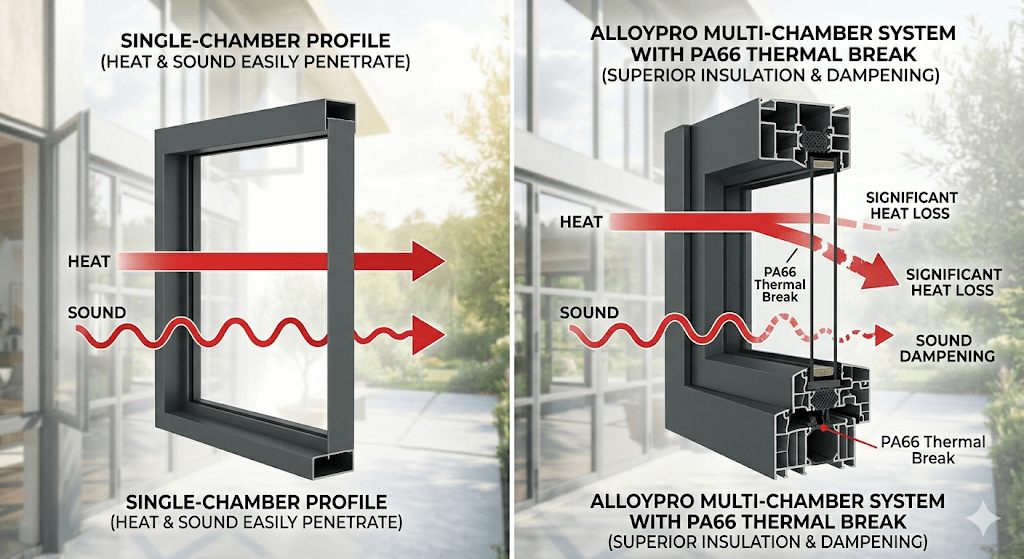
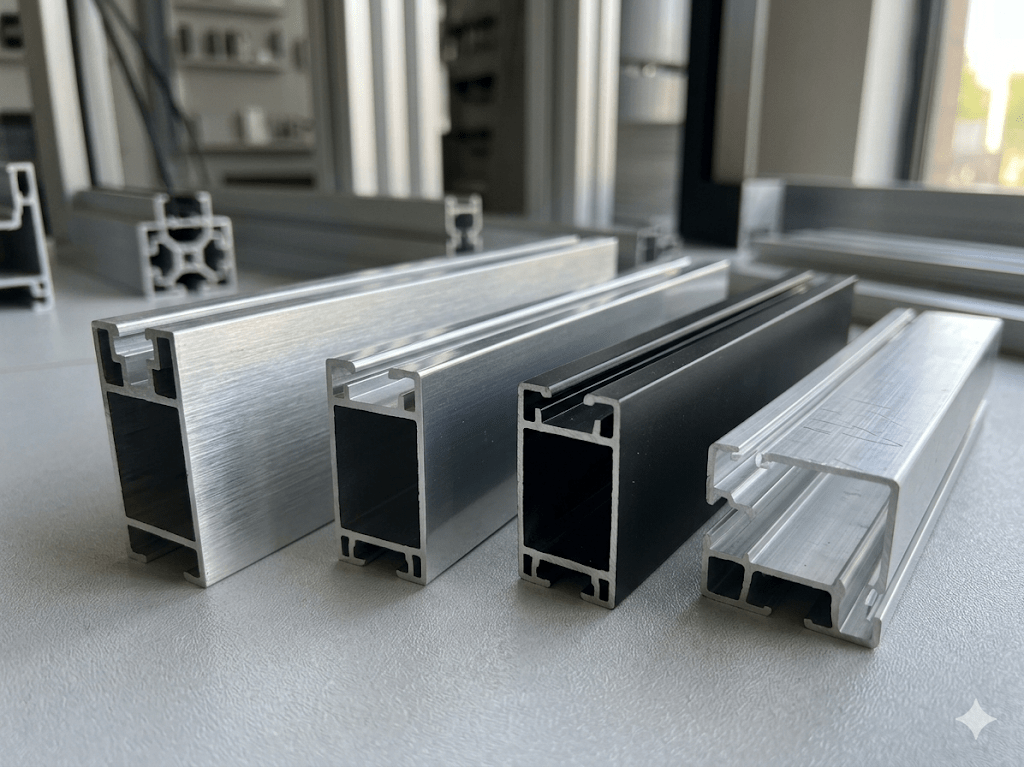
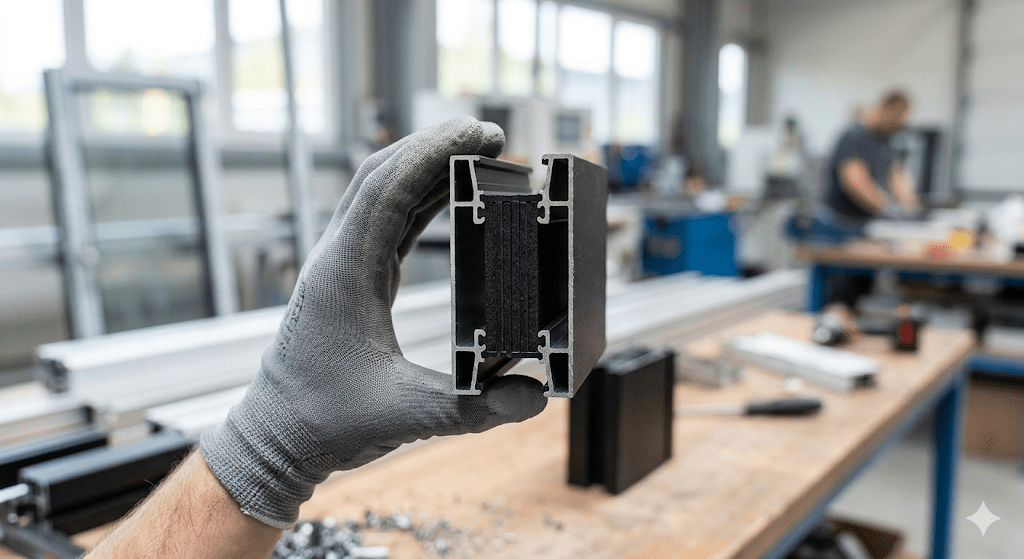
The fundamental difference lies in how air and energy move within the frame. A single-chamber design features one large open cavity. While it provides basic structural support and is cost-effective for simple applications, it allows heat and sound waves to pass through the metal profile with minimal resistance.

In contrast, multi-chamber Aluminum Window Sections utilize internal dividers to create a series of isolated air pockets. These chambers act as a natural buffer, slowing down thermal conduction. These internal ribs also provide additional “stiffness” to the profile, ensuring the frame remains stable under high wind pressure and physical stress.

Thermal Performance of Aluminum Window Sections

Aluminum is a natural conductor of heat. In a single-chamber approach, the large void does little to stop thermal transfer. High-performance Aluminum Window Sections solve this by combining a “thermal break” (a non-conductive barrier) with a multi-chamber geometry.

This combination effectively “traps” still air within the multiple small chambers. Since still air is an excellent insulator, this design significantly reduces the U-value of the window frame. For large-scale projects, this structural choice is the primary driver behind reduced electricity consumption and improved indoor climate control.

Acoustic Comfort: The “Sound Trap” Effect

Beyond temperature, the internal structure impacts urban noise reduction. A hollow, single-chamber frame can act like a drum, vibrating and potentially amplifying external noise.

Multi-chamber Aluminum Window Sections disrupt these sound vibrations through their reinforced internal walls. As noise attempts to travel through the frame, the sound waves hit multiple dividers, each reflecting and absorbing different frequencies. This “sound trap” effect provides a superior shield against traffic and construction noise, making it the standard for high-end residential and commercial interiors.

Conclusion: Engineering Success with AlloyPro

The choice between multi-chamber and single-chamber structures ultimately determines the longevity and comfort of a building. While single-chamber sections may suffice for basic needs, the next generation of architectural standards demands the precision of multi-chamber engineering.

As a specialist in high-performance building solutions, AlloyPro provides advanced Aluminum Window Sections from our manufacturing base in Guangdong. We combine rigorous structural testing with precision extrusion technology to ensure every profile delivers maximum insulation and durability. AlloyPro’s multi-chamber systems offer the reliable structural integrity your architectural projects deserve.

Commercial Aluminum Window: Casement vs Sliding Comparison

Choosing a Commercial Aluminum Window requires you to evaluate the specific needs of your building design. Both casement and sliding systems offer unique benefits for modern architecture. Architects frequently compare Casement vs Sliding Windows to see which design fits their climate best. This guide provides a clear analysis to help you find the right Commercial Aluminum Window for your next build.

How Does Each Commercial Aluminum Window Type Operate?

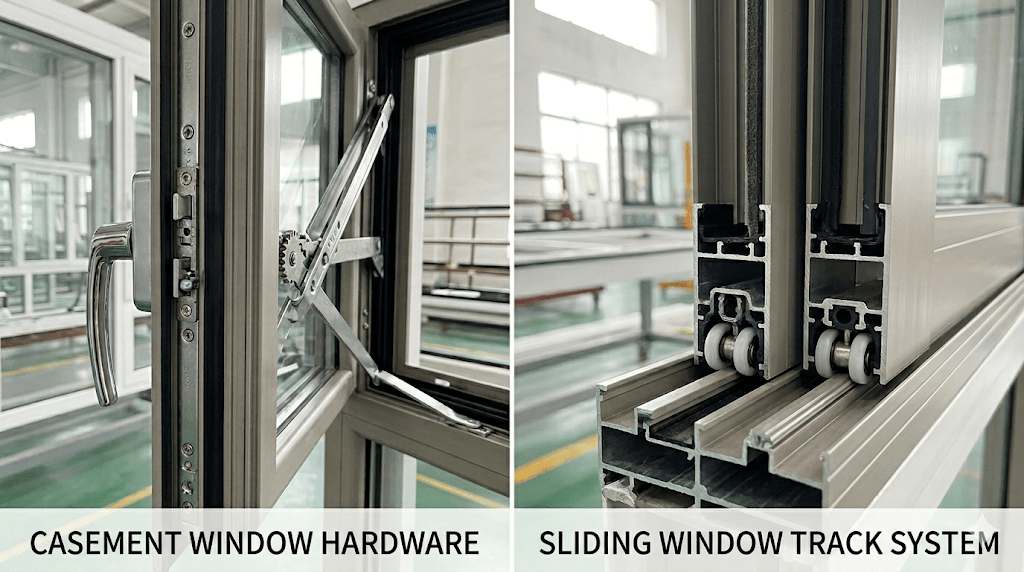
Each Commercial Aluminum Window type uses a different mechanical principle. Casement windows use side hinges to swing outward like a door. This design allows the entire window to open, which helps move more air. In contrast, sliding windows move sideways along a track. This mechanism saves space because the sash does not stick out inside or outside.

Furthermore, your project layout often decides the best choice. Sliding windows work well for walkways or patios where space is tight. Meanwhile, casement windows fit perfectly on angled walls where you want to catch side breezes for natural cooling.

Energy Standards for Your Commercial Aluminum Window

When you evaluate Energy Efficient Windows, both designs meet different goals. Casement windows use a compression seal. When you lock them, the sash presses tight against the frame. This creates a strong barrier against wind and rain. This makes them a great choice for high-rise projects.

Additionally, AlloyPro offers high-capacity sliding systems with thermal break technology. A sliding Commercial Aluminum Window provides large, clear views. They can hold much bigger glass panels than a hinged window. For projects that need a “wall of glass” look, sliding Aluminum Windows for Projects offer a smart and practical solution.

Security Features of a Commercial Aluminum Window

Security is a top priority for every Commercial Aluminum Window. Casement designs use multi-point locks built into the frame for strong protection. On the other hand, modern sliding Aluminum Windows for Projects use reinforced latches. These provide reliable security for commercial buildings.

Furthermore, the life of your Commercial Aluminum Window depends on the metal quality. AlloyPro uses premium 6063-T5 aluminum to ensure both window types resist rust. Whether you pick a casement or a sliding system, choosing the right materials is essential for Energy Efficient Windows.

Finding the Best Commercial Aluminum Window Solution

Ultimately, the best window is the one that fits your project goals. If you need maximum air tightness and a classic style, casement Energy Efficient Windows are a smart investment. They work very well for projects that need to block outside noise.

However, if your project needs a modern look and easy operation for large openings, a sliding Commercial Aluminum Window is the best fit. At AlloyPro, we offer many Aluminum Windows for Projects that meet international standards like AS2047. Contact our team today to explore our solutions and ensure high quality for your build.

PVDF vs Powder Coating for Coastal Aluminum Projects

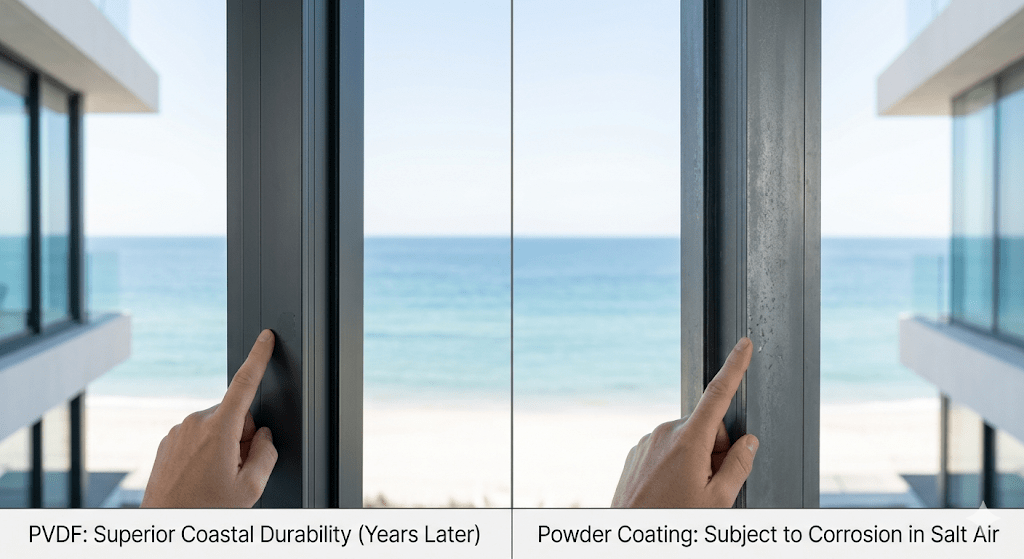
The PVDF vs Powder Coating debate remains crucial for modern coastal construction today. Therefore, harsh salt spray destroys standard aluminum surfaces rapidly. Consequently, choosing the best aluminum finish protects your valuable investment completely. At AlloyPro, we help global clients resolve this important technical decision daily. Ultimately, you must ensure long-term architectural durability for your buildings.

What is Powder Coating Technology?

Powder coating is a highly popular dry finishing process. Therefore, we apply a thermoplastic powder to the raw aluminum surface. Thus, we cure it under high heat completely. This process creates a very tough and hard finish. Moreover, it offers a vast range of beautiful custom colors. However, standard powder coatings struggle with heavy salt concentrations. Ultimately, coastal areas require a far more robust surface treatment.

PVDF vs Powder Coating: The Fluorocarbon Edge

PVDF is a premium resin-based liquid coating system. Therefore, it contains highly stable fluorine atoms always. This creates an incredibly strong chemical bond perfectly. In the PVDF vs Powder Coating comparison, PVDF wins easily. It actively resists intense chemical weathering and salt-air environments. Additionally, these fantastic finishes feature brilliant self-cleaning properties. Thus, they resist ugly chalking and fading completely. Ultimately, PVDF provides a superior barrier against corrosive chloride ions.

PVDF vs Powder Coating: Maintenance and Durability

The lifespan difference is truly significant in coastal environments. When analyzing PVDF vs Powder Coating, PVDF lasts much longer. Therefore, PVDF finishes maintain their color for over 20 years. Powder coatings may show fading in salty air sooner. Furthermore, ongoing maintenance requirements vary between the two options. PVDF surfaces stay incredibly clean for much longer periods. Consequently, slick surfaces repel harmful dust and salt effortlessly. Ultimately, textured powder coatings might require frequent costly rinsing.

Conclusion on PVDF vs Powder Coating Choices

The final decision depends on your specific project location. Inland buildings benefit from cost-effective powder coating applications greatly. However, seaside sites require premium PVDF finishes absolutely. The initial investment is slightly higher for your business. Thus, the long-term maintenance savings are truly substantial. At AlloyPro, we provide both high-quality professional options. Resolve your PVDF vs Powder Coating choice with our expert team. We ensure your aluminum profiles stand the ultimate test today.

Scroll to Top