

PVDF vs Powder Coating for Coastal Aluminum Projects
What is Powder Coating Technology?
Powder coating is a highly popular dry finishing process. Therefore, we apply a thermoplastic powder to the raw aluminum surface. Thus, we cure it under high heat completely. This process creates a very tough and hard finish. Moreover, it offers a vast range of beautiful custom colors. However, standard powder coatings struggle with heavy salt concentrations. Ultimately, coastal areas require a far more robust surface treatment.
PVDF vs Powder Coating: The Fluorocarbon Edge
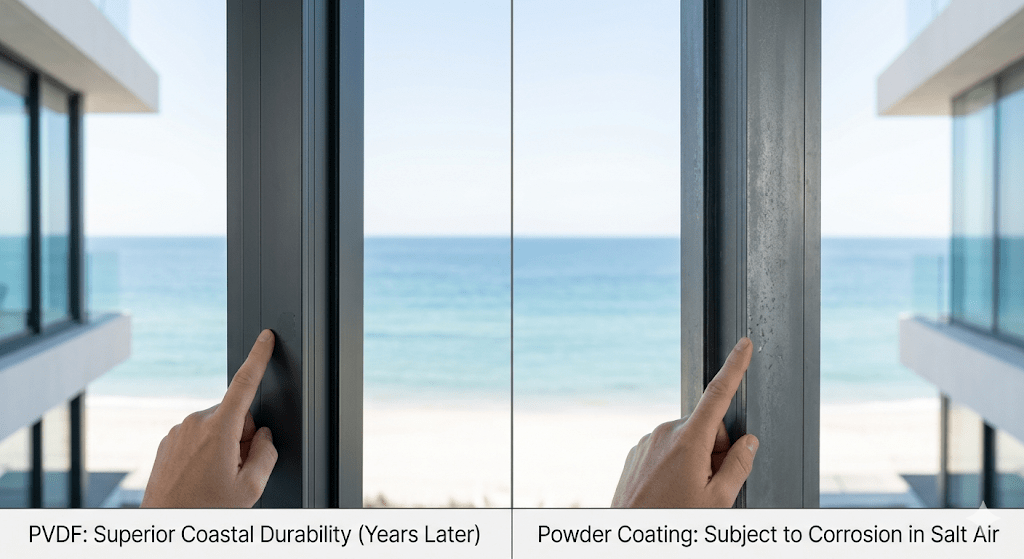
PVDF is a premium resin-based liquid coating system. Therefore, it contains highly stable fluorine atoms always. This creates an incredibly strong chemical bond perfectly. In the PVDF vs Powder Coating comparison, PVDF wins easily. It actively resists intense chemical weathering and salt-air environments. Additionally, these fantastic finishes feature brilliant self-cleaning properties. Thus, they resist ugly chalking and fading completely. Ultimately, PVDF provides a superior barrier against corrosive chloride ions.
PVDF vs Powder Coating: Maintenance and Durability
The lifespan difference is truly significant in coastal environments. When analyzing PVDF vs Powder Coating, PVDF lasts much longer. Therefore, PVDF finishes maintain their color for over 20 years. Powder coatings may show fading in salty air sooner. Furthermore, ongoing maintenance requirements vary between the two options. PVDF surfaces stay incredibly clean for much longer periods. Consequently, slick surfaces repel harmful dust and salt effortlessly. Ultimately, textured powder coatings might require frequent costly rinsing.
Conclusion on PVDF vs Powder Coating Choices
The final decision depends on your specific project location. Inland buildings benefit from cost-effective powder coating applications greatly. However, seaside sites require premium PVDF finishes absolutely. The initial investment is slightly higher for your business. Thus, the long-term maintenance savings are truly substantial. At AlloyPro, we provide both high-quality professional options. Resolve your PVDF vs Powder Coating choice with our expert team. We ensure your aluminum profiles stand the ultimate test today.