







AlloyPro: Solusi Jendela Aluminium dengan Penghalang Termal untuk Anda
1. Teknologi Inti Jendela Aluminium dengan Penghalang Termal
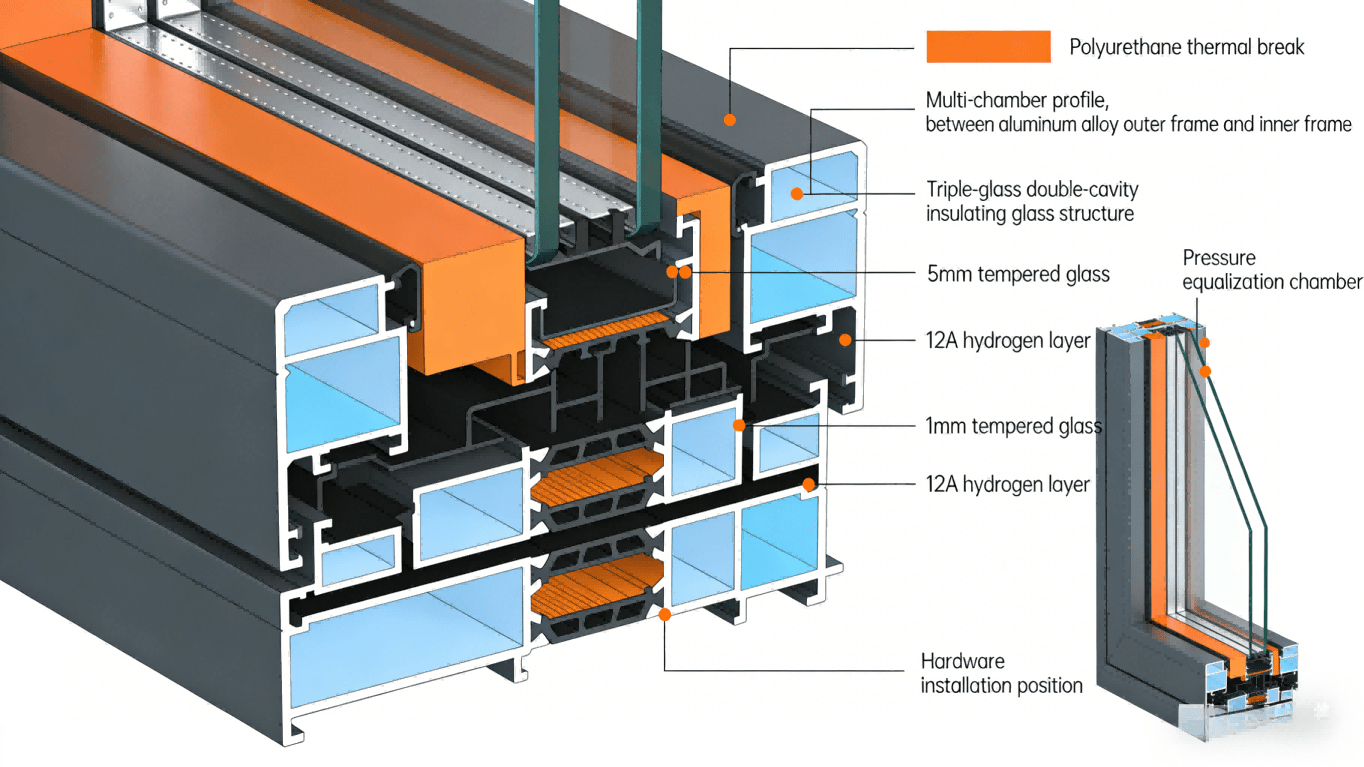
Jendela modern berkinerja tinggi merupakan sistem yang kompleks. Tantangan utamanya adalah meminimalkan perpindahan panas. AlloyPro’s Jendela Aluminium dengan Penghalang Termal menangani hal ini melalui desain terpadu.
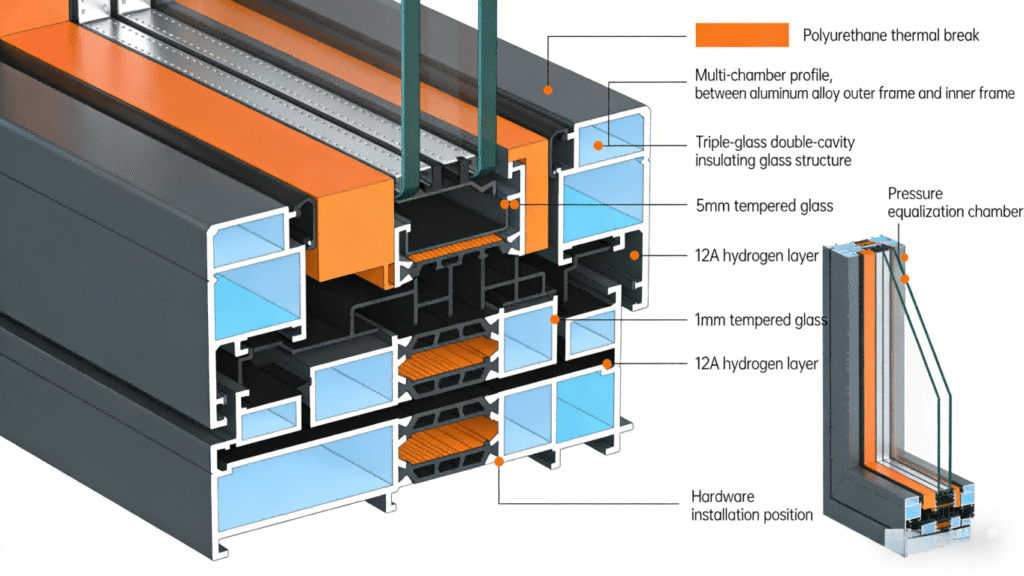
Profil kami dilengkapi dengan teknologi thermal break yang canggih. Lapisan inti poliuretan disuntikkan di antara cangkang aluminium. Hal ini secara efektif menghambat aliran panas. Selain itu, unit kaca juga sama pentingnya. Kami menggunakan unit kaca isolasi (IGU) berkamar ganda. Konfigurasi ini menciptakan beberapa lapisan penghalang, sehingga memastikan Jendela Aluminium dengan Penghalang Termal mencapai kinerja termal yang luar biasa.
2. Kinerja Holistik Jendela Aluminium dengan Penghalang Termal
Kinerja tinggi yang sesungguhnya bersifat multidimensi. AlloyPro Sistem-sistem ini menawarkan serangkaian manfaat yang lengkap.
- Kemampuan Penyegelan yang Tak Tertandingi: Profil presisi dipadukan dengan sistem penguncian multi-titik. Hal ini menghasilkan tingkat kedap udara yang optimal.
- Kenyamanan Akustik: Perpaduan antara keramaian dan kesendirian dalam Jendela Aluminium dengan Penghalang Termal menjadi penghalang suara yang sangat baik. Hal ini mengurangi transmisi suara sekitar 35 desibel.
- Integrasi Cerdas: Sistem kami dirancang agar kompatibel dengan rumah pintar. Sistem ini terintegrasi dengan sistem keamanan untuk pengelolaan energi otomatis.
3. Menyediakan Solusi Lengkap Jendela Aluminium dengan Sistem Pemisah Termal
Kami menyadari bahwa jendela merupakan bagian penting dari kinerja sebuah bangunan. Oleh karena itu, AlloyPro menyediakan solusi sistem yang lengkap.
Layanan kami dimulai dengan konsultasi bersama para ahli. Mulai dari tahap desain awal hingga panduan pemasangan, kami memastikan bahwa Jendela Aluminium dengan Penghalang Termal berfungsi sesuai yang diharapkan. Pendekatan menyeluruh ini menjamin bahwa setiap produk memiliki daya tahan dan nilai estetika yang tinggi.
Kesimpulan: Komitmen Kami terhadap Masa Depan yang Berkelanjutan
Memilih AlloyPro merupakan investasi untuk masa depan yang lebih hijau. Dengan mengurangi konsumsi energi, produk kami secara langsung mengurangi emisi karbon.
Kami mengundang para arsitek untuk bergabung bersama kami. Jadilah mitra kami AlloyPro untuk menentukan Jendela Aluminium dengan Penghalang Termal yang memadukan keunggulan teknis dengan tanggung jawab lingkungan.

How to Reduce Aluminum Costs: 5 Smart Tips for Engineers
Here are five practical strategies to reduce your total aluminum expenditure effectively.
1. Collaborate Early to Reduce Aluminum Costs
Involving your supplier at the design stage is the most effective way to save. Their engineers can spot opportunities you might miss.
- How it helps: They can suggest design tweaks for easier manufacturing. This leverages expert knowledge.
- Key benefit: Early input prevents costly changes later. This is a primary way to Reduce Aluminum Costs effectively.
2. Optimize Design to Reduce Aluminum Costs
Design determines up to 80% of the cost. Overly complex designs waste material.
- Smart approach: Simplify the cross-section. Use hollow sections to save weight. Standardize angles to ease production.
- Core principle: Design for manufacturability. The goal is to use the least material while meeting requirements. This strategic design helps Reduce Aluminum Costs significantly.
3. Choose the Right Alloy Wisely
Not every project needs premium-grade aluminum. Selecting an alloy that’s “too good” is a source of waste.
- Match alloy to function: For structural parts, 6061-T6 is strong. For trims, 6063-T5 performs well at a lower price.
- Ask your supplier: Describe the environment. A reliable supplier like AlloyPro can recommend the most economical alloy.
4. Leverage Standard Profiles
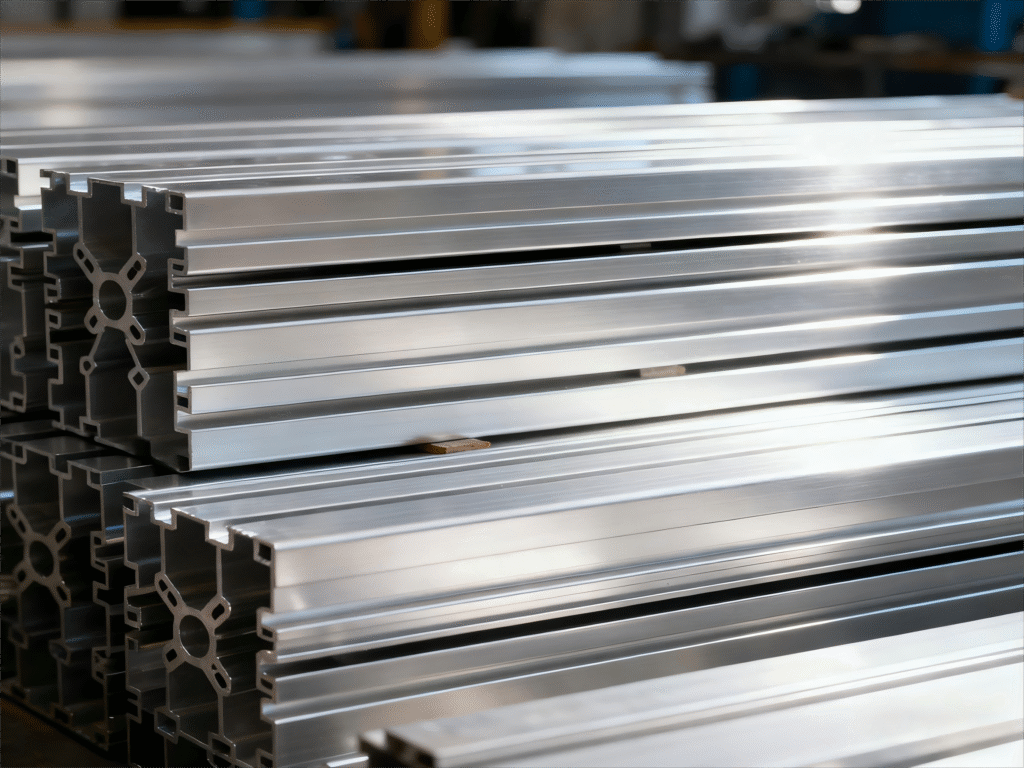
Fully custom profiles require new molds. This adds significant upfront expense.
- First check standards: Always review your supplier’s catalog. A minor adjustment to fit a standard option saves mold investment.
- Consider modification: If a standard profile isn’t perfect, ask for a small modification. This is cheaper than a new design.
5. Total Cost Strategy to Reduce Aluminum Costs
The initial price is only part of the story. Consider the total cost of ownership.
- Factor in processing: An alloy with better machinability might cost more but reduces machining time.
- Value partnership: A supplier who ensures on-time delivery saves you from hidden delays. This holistic view is vital to Reduce Aluminum Costs in the long run.
Kesimpulan
Effective cost reduction comes from strategic planning. By partnering with AlloyPro Aluminum, you achieve the balance between performance and budget.
For specific advice on how to Reduce Aluminum Costs for your project, contact our engineering team today.

Revolusi Bangunan dari Paduan Aluminium: Prospek Masa Depan
1. Tren Rendah Karbon dalam Bangunan dari Paduan Aluminium
Upaya untuk mewujudkan konstruksi berkelanjutan tidak dapat disangkal. Bangunan dari Paduan Aluminium Aluminium unggul dalam hal ini berkat kemampuannya yang luar biasa untuk didaur ulang. Tidak seperti banyak bahan lainnya, aluminium dapat didaur ulang berulang kali tanpa kehilangan kualitasnya. Hal ini secara drastis mengurangi limbah.
Namun, keuntungannya tidak hanya sebatas itu. Sistem thermal-break modern meningkatkan isolasi termal. Sistem ini mengurangi kebutuhan energi untuk pemanasan. Selain itu, sifat aluminium yang ringan menjadikannya pilihan ideal untuk sistem fotovoltaik terintegrasi bangunan (BIPV). Dengan memilih solusi canggih, para pengembang berinvestasi dalam efisiensi lingkungan.
2. Ketepatan Digital untuk Bangunan dari Paduan Aluminium
Alat digital sangat penting untuk mencapai tujuan rendah karbon. Digitalisasi menjamin keakuratan dalam hal-hal yang kompleks Bangunan dari Paduan Aluminium.
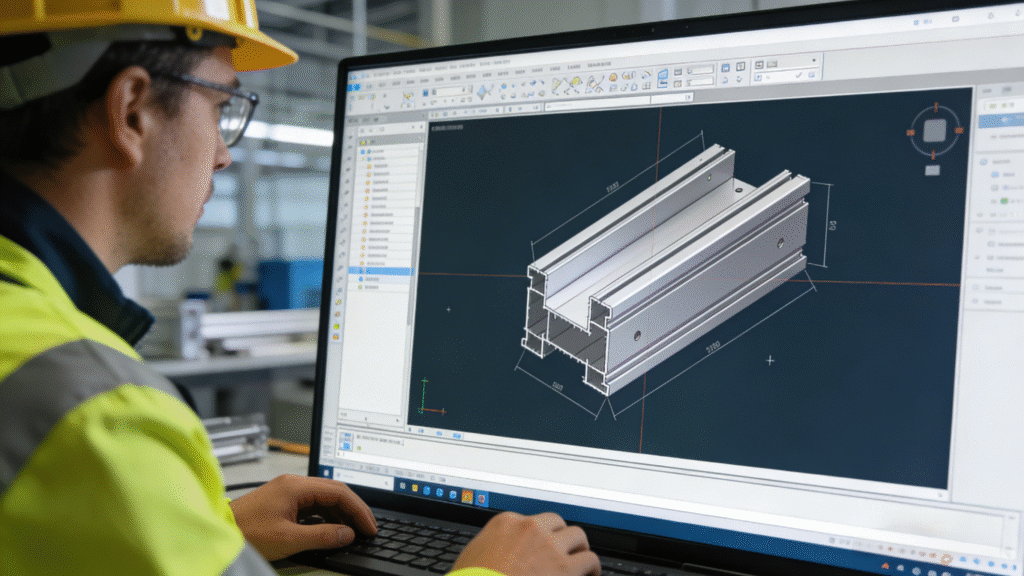
Selama tahap perancangan, BIM (Building Information Modeling) memungkinkan simulasi yang akurat. Ketepatan ini juga diterapkan di lokasi proyek. Pemindaian laser 3D dapat melakukan pengukuran struktur dengan efisiensi tinggi. Hal ini memastikan bahwa setiap panel khusus pas dengan sempurna.
Selain itu, pabrik digital memanfaatkan data untuk menggerakkan proses pemesinan otomatis. Proses “digital twin” ini memastikan pelaksanaan yang sempurna dan menghemat sumber daya.
3. Konstruksi Bangunan dari Paduan Aluminium yang Telah Diproduksi Massal
Ketepatan digital membuka jalan bagi lompatan berikutnya: komersialisasi. Hal ini sangat penting bagi dunia modern Bangunan dari Paduan Aluminium. Artinya, memperlakukan komponen-komponen tersebut layaknya produk industri standar.
Misalnya, sistem dinding tirai terpadu diproduksi di pabrik yang terkendali. Sistem tersebut cukup diangkat dan dipasang di lokasi proyek. Demikian pula, sistem bekisting aluminium prefabrikasi dapat digunakan kembali.
Pendekatan ini meningkatkan efisiensi di lokasi proyek hingga lebih dari 30%. Pendekatan ini menjamin kualitas tinggi yang konsisten dan jadwal yang dapat diprediksi. Ini merupakan cara yang lebih cerdas dalam membangun.

Kesimpulan: Masa Depan yang Saling Melengkapi
Kekuatan sesungguhnya terletak pada penggabungan tujuan. Sebuah unit yang dirancang secara digital adalah produk berkinerja tinggi. Seiring dengan perkembangan AI, Bangunan dari Paduan Aluminium akan menjadi kontributor aktif dalam bidang efisiensi energi.
AlloyPro berkomitmen terhadap masa depan ini. Melalui inovasi berkelanjutan, kami menghadirkan solusi yang selaras dengan tren global ini. Revolusi ini bertujuan untuk menciptakan ruang yang lebih cerdas bagi generasi mendatang.
The Green Engine: How Recycled Aluminum Alloys Power “Dual-Carbon” Goals
1.Environmental Advantages of Recycled Aluminum Alloys
The environmental impact of this material is transformative. Producing secondary aluminum requires only about 5% of the energy needed for primary aluminum extraction. This massive reduction cuts greenhouse gas emissions by up to 95%.
Therefore, switching to Recycled Aluminum Alloys is one of the most effective strategies for companies to shrink their carbon footprints immediately. Additionally, aluminum is unique because it can be recycled indefinitely without losing its atomic properties. This capability creates a true closed-loop circular economy, minimizing landfill waste and conserving bauxite resources.
2.Advanced Technology Ensures Purity and Performance
In the past, recycled metal was often associated with lower quality. However, modern advancements have completely transformed the industry. Today, we utilize sophisticated sorting technologies, such as laser-induced breakdown spectroscopy (LIBS) and X-ray sorting, to separate scrap with extreme precision.
Consequently, we can guarantee high purity and precise alloy compositions. High-quality recycled materials now reliably meet the stringent technical standards required by aerospace and automotive sectors. This proves that choosing sustainability does not mean compromising on mechanical strength or durability.
3. Key Applications Driving the Green Transition
The versatility of these eco-friendly materials is driving adoption across major industries:
- New Energy Vehicles (NEVs): Automakers use lightweight recycled aluminum for chassis and battery housings to extend range while lowering the vehicle’s lifetime carbon emissions.
- Green Architecture: Builders specify low-carbon aluminum for curtain walls and window frames to achieve certifications like LEED and BREEAM.
- Consumer Electronics: Tech giants are increasingly using recycled metal in laptops and smartphones to meet consumer demand for ethical products.
4. AlloyPro’s Sustainable Solution and Traceability
Di AlloyPro, we integrate sustainability into every step of our operation. We do not just process scrap; we engineer premium-grade sustainable alloys ready for high-end applications.
Crucially, we provide full supply chain traceability. Our clients receive detailed certification verifying the recycled content of their products. This transparency helps manufacturers in the automotive and electronics industries meet their own ESG (Environmental, Social, and Governance) goals seamlessly.
Conclusion: Partnering for a Sustainable Future
Adopting Recycled Aluminum Alloys is no longer just an option; it is a strategic business decision. It strengthens corporate ESG profiles, ensures compliance with international carbon taxes, and meets the growing demand from eco-conscious markets.
Recycled aluminum is not just an alternative material; it is a foundational pillar for the future of sustainable manufacturing. Partner with AlloyPro today to find your practical path to decarbonization.
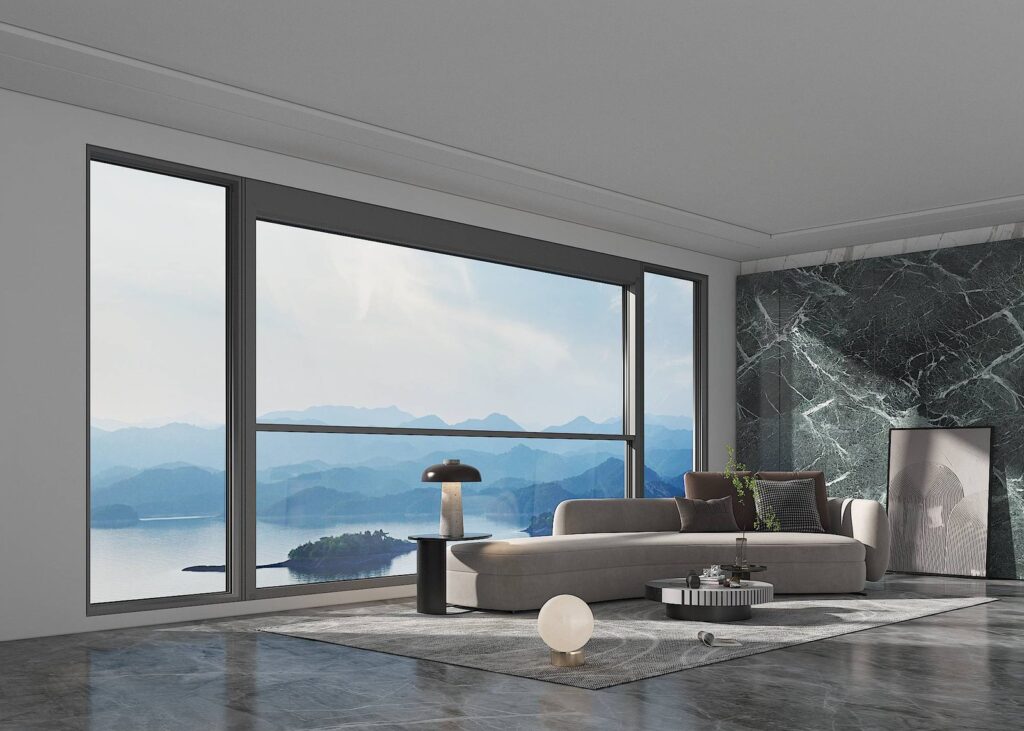
The Smart Core: How Aluminum Alloy Windows & Doors Craft the Future
1.Thermal Science of Aluminum Alloy Windows & Doors
The primary challenge for any window is balancing light entry with heat transfer. Aluminum alloy addresses this through advanced engineering. The key isthermal break technology.
A high-performance insulating bar is inserted between the inner and outer aluminum frames, creating a barrier that drastically reduces heat conduction. Furthermore, the inherent strength of aluminum allows it to support larger panes of multi-chambered double or even triple glazing, often filled with inert gases like Argon. When combined with low-emissivity (Low-E) glass coatings, this system reflects interior heat back inside during winter and blocks solar heat gain in summer, delivering outstanding year-round energy savings.
2. Smart Integration in Aluminum Alloy Windows & Doors
Energy efficiency is also about intelligent control. This is where Aluminum Alloy Windows & Doors truly shine as a future-proof platform.
Their rigid profiles provide an ideal raceway for integrating smart hardware. Motors and sensors can be discreetly housed within the frame. These components connect to your home automation system. Consequently, windows can close automatically when rain is detected, optimizing HVAC usage intelligently.
3. Sustainable Value of Aluminum Alloy Windows & Doors
An investment in high-performance windows must last. Aluminum Alloy Windows & Doors offer exceptional corrosion resistance. This ensures that the seal remains flawless for decades.
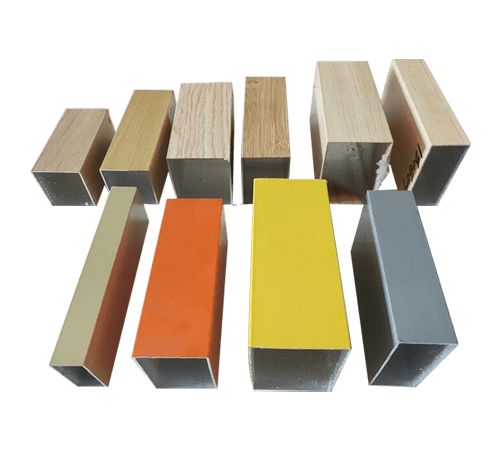
Aesthetically, modern powder coating offers a vast range of colors. Ultimately, choosing AlloyPro is a sustainable choice. The 100% recyclability contributes to a circular economy, reducing the environmental footprint significantly.
Conclusion: The Essential Interface
In conclusion, Aluminum Alloy Windows & Doors are redefining modern living. They are no longer just framing materials but essential smart interfaces.
By masterfully combining thermal innovation and intelligent connectivity, AlloyPro offers the cornerstone technology for your smart home.