






Adress

Guangdong, China

Email

postmaster@alloypro.net

ACP vs Aluminum Cladding: How to Choose the Right Facade Material?

Struggling with the choice between ACP vs Aluminum Cladding for your building’s facade? You are not alone. Selecting the right material is a critical decision that impacts aesthetics, budget, and longevity. Two of the most popular choices are Aluminum Composite Panels (ACPs) and Aluminum Panels. This guide provides a clear comparison to help you unlock expert insights and find the best solution for your project.

Understanding Aluminum Composite Panels (ACPs)

Aluminum Composite Panels consist of two thin aluminum sheets bonded to a core. This sandwich structure defines their key characteristics.

Furthermore, ACPs are remarkably lightweight. This makes them easier to install, often reducing labor costs. Additionally, they offer excellent flatness. They come in a vast array of colors and prints. This versatility allows for great creative freedom.

However, their performance depends on the core. Standard PE cores are cost-effective but combustible. For high-risk projects, fire-retardant mineral cores are essential.

Exploring Aluminum Cladding Panels

In contrast, regarding ACP vs Aluminum Cladding, the solid aluminum panel is made from a single sheet of alloy. They are fabricated by cutting and bending the metal.

The primary advantage of aluminum panels is superior strength. Being solid metal, they are highly impact-resistant. Moreover, they are non-combustible (A2/S1-d0). This meets the highest fire safety standards.

Additionally, aluminum panels excel in weather resistance. High-quality PVDF coatings provide exceptional protection against UV rays. Consequently, they have a very long service life.

Key Comparison: Cost, Safety, and Durability

Let’s break down the comparison into clear factors to help you decide:

  • Weight: ACPs are lighter, leading to simpler support structures.
  • Finish: Both offer excellent flatness. ACPs provide more decorative prints. Aluminum panels excel in solid metallic tones.
  • Durability: Aluminum panels are generally stronger. They are the preferred choice for demanding environments.
  • Fire Safety: Solid aluminum panels are non-combustible. ACPs require specific mineral cores to ensure safety.
  • Cost: Typically, ACPs have a lower initial material cost. Aluminum panels offer longevity that provides better long-term value.

Making the Right Choice for Your Project

So, which material is best? Consider this simple guide on ACP vs Aluminum Cladding:

Choose Aluminum Composite Panels (ACPs) if: Your project prioritizes budget-friendly costs or requires complex decorative prints. Aolaibo offers high-quality ACPs with various core options.

Choose Aluminum Panels if: Your project demands maximum durability and superior fire safety (e.g., high-rises, airports). As a specialist manufacturer, Aolaibo provides precision-fabricated panels.

Conclusion

Ultimately, the best choice balances design, budget, and regulations. By understanding the differences in ACP vs Aluminum Cladding, you can select the material that performs flawlessly.

Ready to choose the ideal AlloyPro facade solution for your build? Visit Guangdong AlloyPro Aluminum to explore our full range. Contact us today to unlock more expert insights for your project.

Aluminum Extrusion Process: From Ingot to Product Secrets

Have you ever wondered how raw aluminum transforms into precise profiles? The secret lies in the Aluminum Extrusion Process. At Guangdong AlloyPro Aluminum, we combine advanced technology with expert engineering. Join us as we walk through our streamlined, digital production line.

Stage 1: Precision Starts with Raw Material

Our process begins with rigorous selection. We source high-grade aluminum ingots to ensure optimal alloy composition. Whether for strength or machinability, quality is key. Upon arrival, each batch undergoes spectral analysis. This digital verification guarantees the makeup meets strict standards before the Aluminum Extrusion Process begins.

Image ALT Text: Worker monitoring a modern furnace and casting system in an aluminum plant.

Stage 2: Smart Melting and Casting

The verified ingots then move to our computer-controlled furnaces. Here, temperature is managed to achieve a homogeneous melt. Subsequently, the molten aluminum is transferred to casting stations. Crucially, our digital systems regulate the cooling rate. This results in uniform billets, which are the foundation for a flawless Aluminum Extrusion Process.

Stage 3: The Core of the Aluminum Extrusion Process

This stage is the heart of our operation. The solid billets are heated and forced through a custom die. However, force alone is not enough. Our integrated digital controls monitor pressure and temperature in real-time. This constant adjustment ensures every meter of profile maintains dimensional accuracy.

Stage 4: Automated Enhancement and Finishing

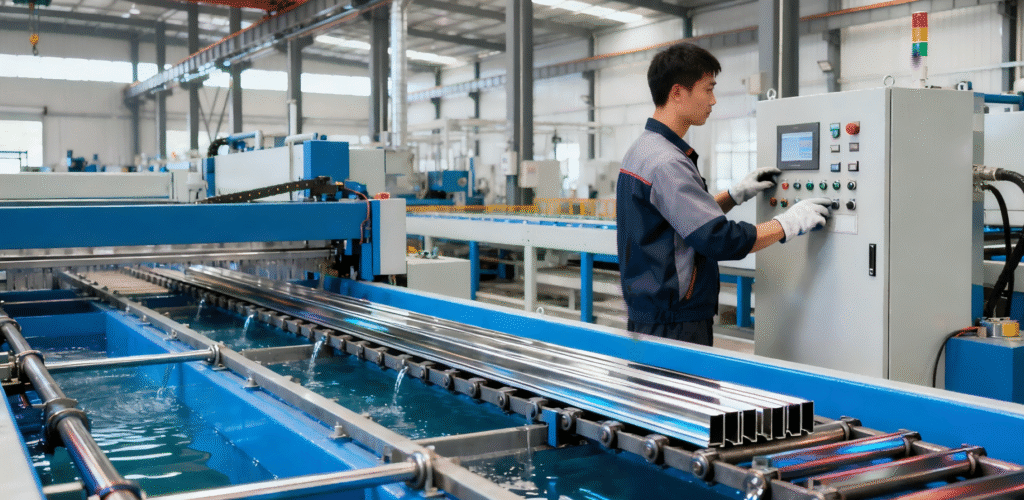
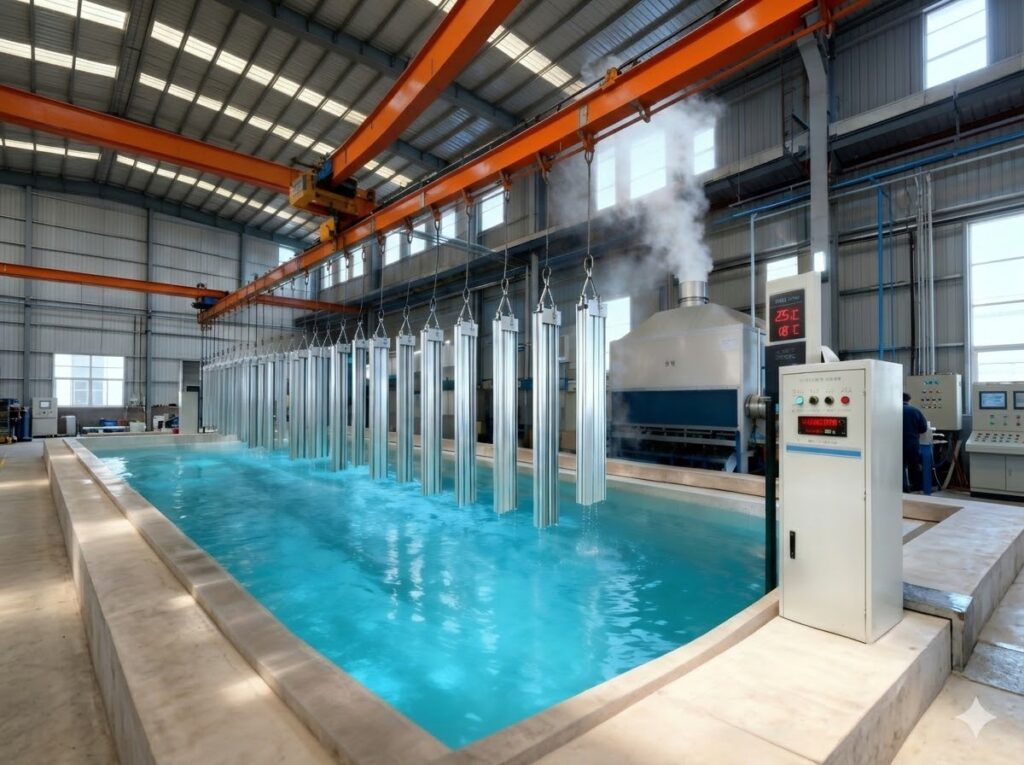
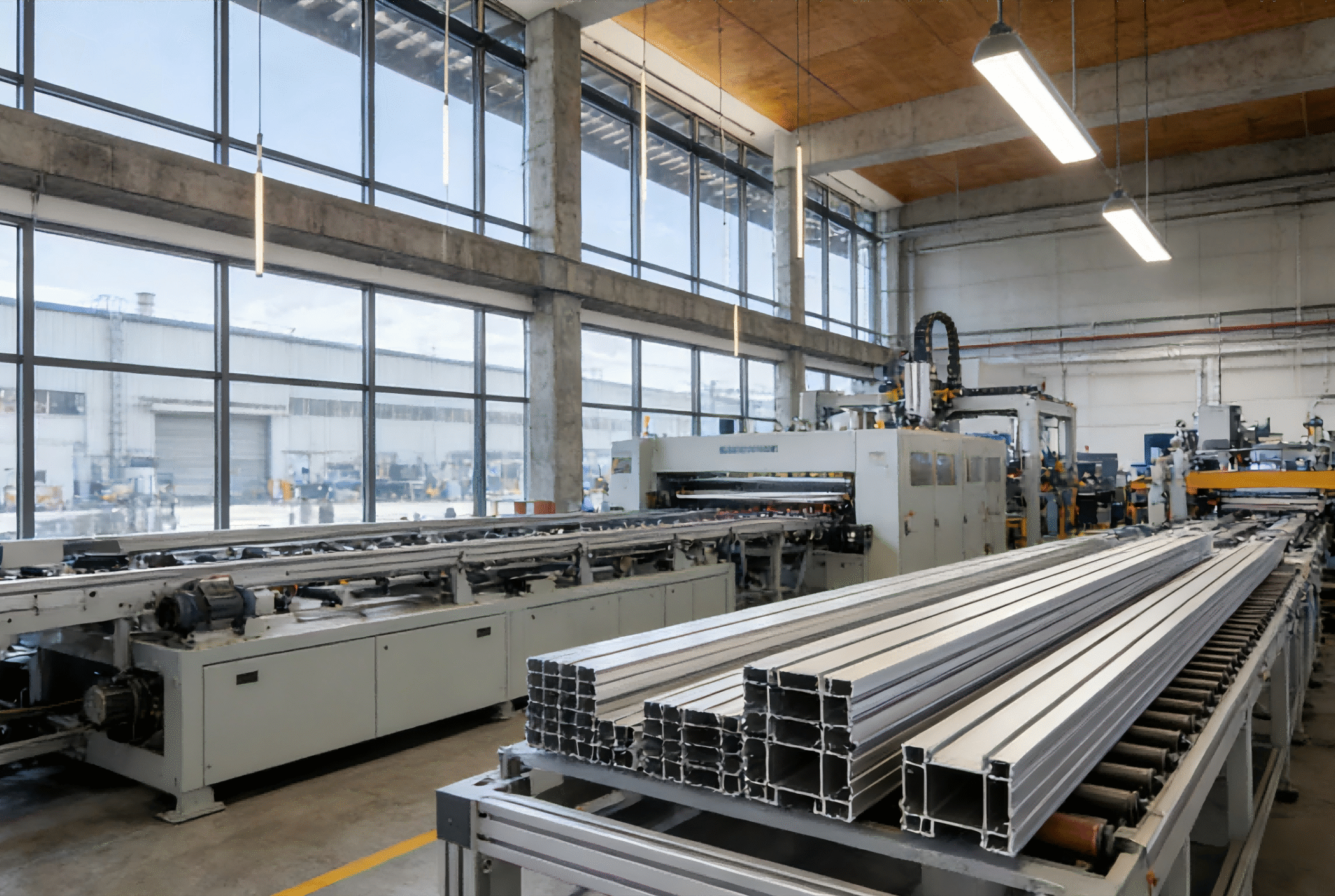
After the Aluminum Extrusion Process, profiles enter our automated handling system. They are rapidly cooled and straightened for perfect alignment. Following this, they move through enhancement processes. For instance, profiles may undergo artificial aging in digitally-timed ovens. Additionally, they can proceed to surface treatment lines for anodizing, where parameters are strictly maintained.

Stage 5: Final Inspection and Shipment

Finally, every batch undergoes a multi-point inspection. We utilize digital measuring tools against your specifications. Furthermore, our system generates a quality log for traceability. Once approved, products are packaged for delivery.

Why Our Digital Line Matters

Our digital integration delivers clear benefits. It ensures consistency and reduces human error. Moreover, it provides data-driven capability to manage custom orders. Ultimately, our advanced Aluminum Extrusion Process gives you reliable solutions that integrate seamlessly into your designs.

Ready to Specify Your Components?

Explore our catalog or contact our engineering team today. Let Aolaibo’s digital precision bring your ideas to life.

Anodizing vs Powder Coating: Best Aluminum Finish Guide

For industrial aluminum profiles, surface finishing is not just about aesthetics. It is a critical process that enhances corrosion resistance and longevity. Anodizing vs Powder Coating are the two dominant technologies. However, choosing between them can be challenging. This guide clearly explains both methods to help you make the best decision for your project.

Anodizing: Enhancing the Metal Itself

Anodizing is an electrochemical process. We immerse the aluminum profile in an electrolyte bath. This process creates a thick aluminum oxide layer. This layer is not a separate coating but a transformed part of the base metal.

Its key advantages include:

  • Exceptional Durability: The oxide layer offers superior abrasion resistance.
  • Excellent Heat Dissipation: It retains thermal conductivity better than organic coatings.
  • Natural Appearance: It provides a professional look with a subtle metallic grain.

Therefore, in the debate of Anodizing vs Powder Coating, anodizing is ideal for applications requiring high wear resistance. Examples include precision machine frames and heat sinks.

Powder Coating: Superior Protection & Color

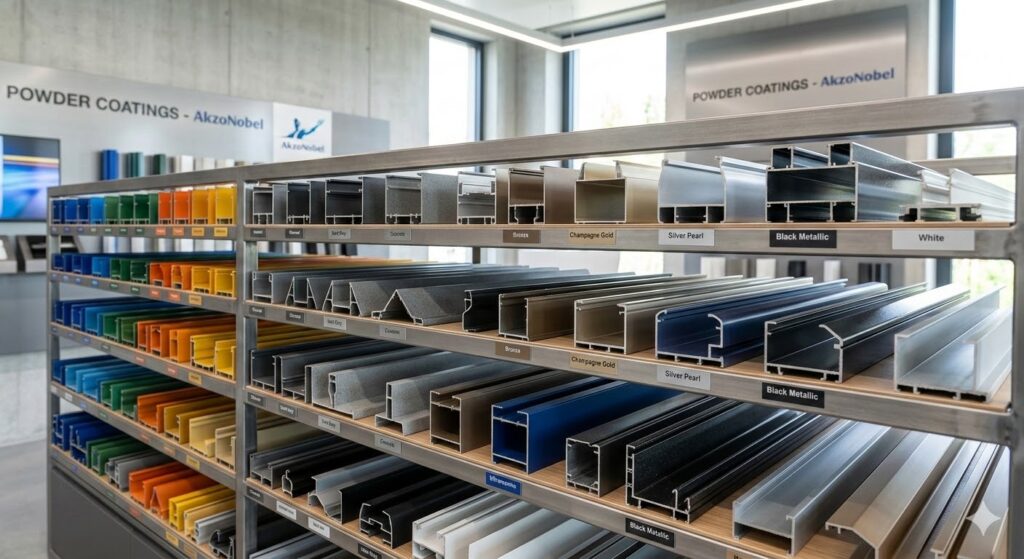
Powder coating uses a physical process. We apply electrostatically charged powder to the aluminum. The profile then cures in an oven to form a smooth film.

This technology offers distinct benefits:

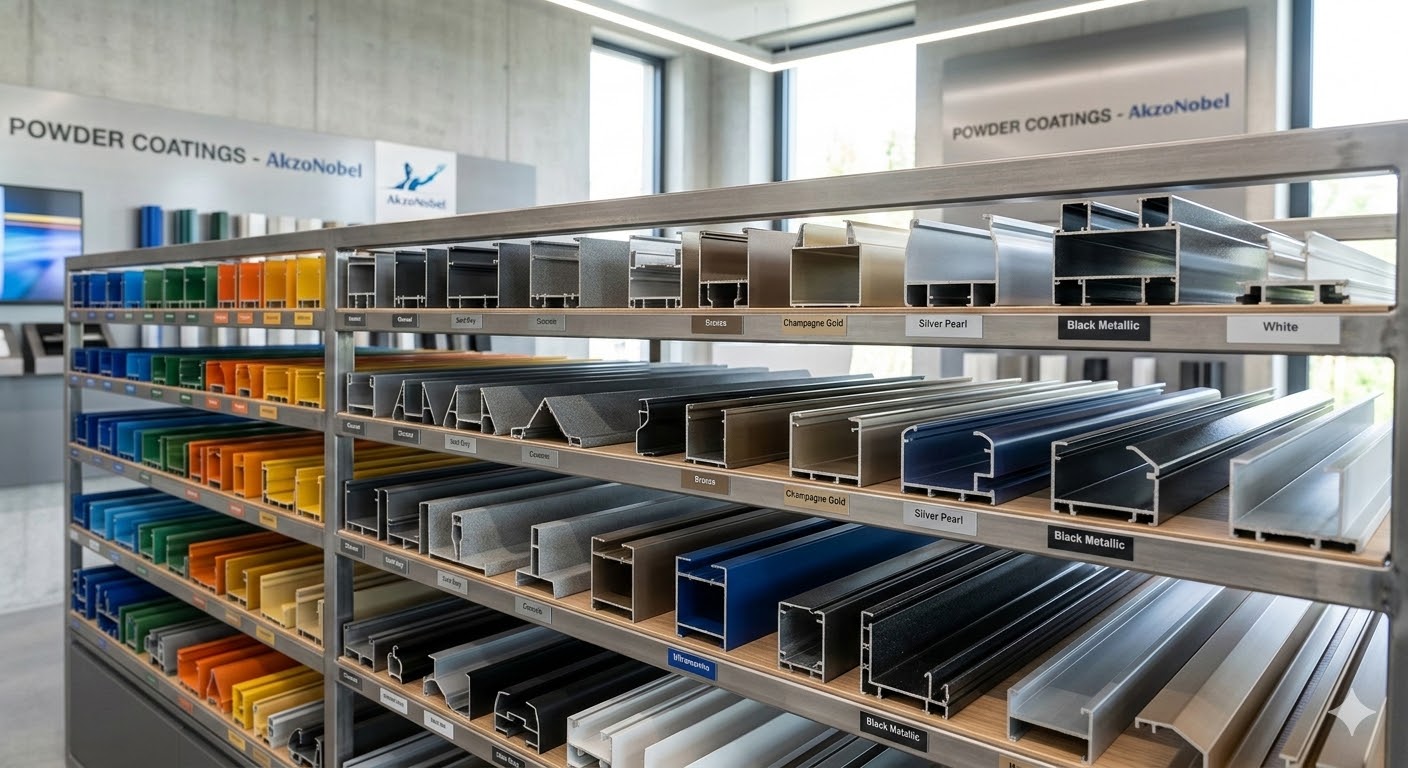
  • Vast Color Options: You have access to virtually any RAL color and texture.
  • Strong Corrosion Resistance: The thick film acts as a robust barrier against UV rays.
  • Uniformity: The process ensures even coverage on complex shapes.

Powder coating is the perfect choice for architectural facades and projects requiring specific color matching.

How to Choose: Anodizing vs Powder Coating

Your choice should depend on your project’s core requirements. Here is a direct comparison:

  • Appearance: Choose Anodizing for a metallic look. Choose Powder Coating for vibrant solid colors.
  • Performance: Anodizing excels for abrasion resistance. Powder coating offers superior barrier protection against weather.
  • Cost: Standard anodizing is often cost-effective. For custom colors, powder coating can be more economical.

In summary, there is no universally “better” option. Anodizing enhances inherent properties, while powder coating provides a customizable shell.

Conclusion

At Guangdong AlloyPro Aluminum, we operate advanced lines for both methods. Our team offers free consultations to recommend the most cost-effective solution.

Contact us to discuss Anodizing vs Powder Coating for your specific application. Ensure your aluminum profiles are built to last, inside and out.

Modular Aluminum Profile Systems: The Backbone of Agile Smart Factories

Industry 4.0 is revolutionizing manufacturing. It focuses on creating connected and highly adaptable factories. However, traditional fixed steel structures often slow down this transformation. In contrast, Modular Aluminum Profile Systems are becoming the essential framework for the future. Think of them as industrial building blocks. They provide the flexibility needed for rapid change and continuous improvement.

1.Enable Rapid Deployment with Modular Aluminum Profile Systems

Speed is crucial in modern manufacturing. Modular Aluminum Profile Systems allow for incredibly fast assembly. You can build structures using standard parts and simple tools. Specifically, no welding is needed. This drastically cuts the time from design to a working production line.

Additionally, these systems make prototyping easy. You can quickly build a full-scale model to test your layout. This agility lets you respond to new market demands without major delays.

2. Offer Unmatched Flexibility and Scalability

The true value of a smart factory lies in adaptation. Modular Aluminum Profile Systems excel here. You can easily reconfigure, extend, or repurpose the system as needs change. Modify a workstation in hours or redesign a full layout over a weekend.

This approach also protects your investment. You can reuse components in new configurations instead of scrapping them. Consequently, this supports lean manufacturing by allowing your floor plan to evolve seamlessly.

3. Simplify Automation and Tech Integration

Smart factories rely on data. Modular Aluminum Profile Systems provide a perfect platform for this. They offer a rigid structure to mount robots and sensors. The integrated T-slots allow for secure mounting of any component.

Furthermore, the open design makes cable management simple. You can neatly organize power and data lines for your IoT devices. This ensures reliable operation and easy maintenance.

4. Support a Sustainable and Efficient Workspace

Beyond flexibility, Modular Aluminum Profile Systems create a better environment. Aluminum is strong yet lightweight. This makes structures safer and easier to handle.

Moreover, the material is corrosion-resistant and fully recyclable. This supports your sustainability goals. The modular nature helps organize the workspace efficiently. A clean floor is essential for high-quality production.

Build Your Agile Future Today

To succeed in Industry 4.0, your factory must be agile. Modular Aluminum Profile Systems are a strategic tool for innovation. They empower you to implement changes fast and cut downtime.

Ready to build the foundation of your smart factory? Explore our precision-engineered Modular Aluminum Profile Systems. Contact our engineering team for a consultation on your next project.

Custom Aluminum Profiles with 6063 Aluminum Temper finish

6061 vs 6063 Aluminum: Which Is Right for Your Project?

When selecting aluminum extrusions, 6061 and 6063 are the most common choices. However, many engineers struggle to decide between 6061 vs 6063 Aluminum. This article clearly explains their core differences and guides you to the best choice for your specific project needs.

Core Composition and Property Differences

Although both are alloys, the composition of 6061 vs 6063 Aluminum defines their characteristics.

6061 aluminum contains higher proportions of magnesium and silicon, plus added copper. This mix makes it a heat-treatable forging alloy with significantly higher strength, close to mild steel levels. Furthermore, it offers excellent machinability.

In contrast, 6063 aluminum has lower magnesium and silicon content and no copper. This formulation provides superior extrudability. Consequently, it allows for more complex shapes and smoother surface finishes. It also achieves better results in anodizing.

Direct Mechanical Properties Comparison

Mechanical properties are often the deciding factor in the 6061 vs 6063 Aluminum selection.

  • Strength and Hardness: 6061 aluminum surpasses 6063 in tensile strength. For instance, 6061-T6 can achieve over 310 MPa tensile strength, while 6063-T6 is typically around 240 MPa. Therefore, 6061 is the preferred choice for load-bearing structures.
  • Ductility: 6063 aluminum is more ductile and easier to form into intricate geometries. If you need detailed architectural trims, 6063 is often the more economical option.

Selection Guide: Match the Alloy to Your Application

Your specific project requirements are the ultimate criteria.

Choose 6061 Aluminum if your project involves:

  • High-Stress Structural Parts: Such as truck frames and industrial frameworks.
  • Extensive Machining: Parts that will undergo significant CNC machining.
  • Aerospace: Applications where a high strength-to-weight ratio is critical.

Choose 6063 Aluminum if your project emphasizes:

  • Architectural Applications: Such as window frames and railings. Its superior surface finish is a key advantage.
  • Complex Profiles: Shapes that require smooth surfaces and fine detail.
  • Anodizing Quality: Ideal for products needing colored finishes.

How ALLOYPRO Can Support Your Decision

At ALLOYPRO Aluminum, we supply high-quality profiles. Our technical team can provide expert advice on 6061 vs 6063 Aluminum selection based on your design drawings. We ensure the optimal balance of performance and cost.

In summary, there is no universally “better” material. 6061 is the champion of strength, while 6063 is the expert in finish.

If you have questions about your specific application, contact us for personalized advice.

How to Protect Aluminum Profile Shipment: A Professional Guide

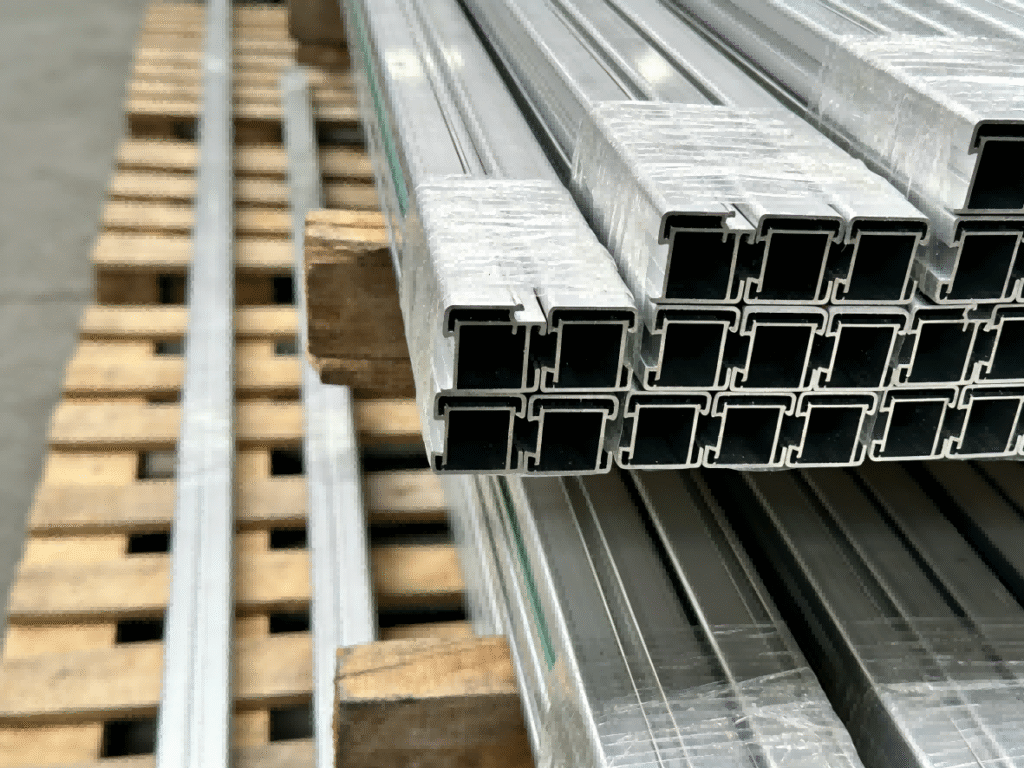
Securing your order doesn’t end with production. Knowing how to Protect Aluminum Profile Shipment is the final, critical step. Professional packaging and anti-corrosion treatment determine if your products arrive in perfect condition. Proper methods prevent costly damage. Therefore, this guide ensures your investment is fully protected from our factory to your site.

The Foundation: Cleaning to Protect Aluminum Profile Shipment

We start by ensuring every profile is clean. Residual oils or moisture can trap corrosive agents. Consequently, our process includes thorough degreasing followed by complete drying. This step creates the ideal surface. It allows all subsequent measures to Protect Aluminum Profile Shipment effectively.

Advanced Protection: VCI Technology

For long sea voyages, standard wrapping is insufficient. VCI (Vapor Corrosion Inhibitor) technology provides superior defense. We place special VCI papers within the bundles. These papers release a protective vapor. This forms an invisible shield over the metal. This method actively helps Protect Aluminum Profile Shipment against salt air and humidity.

Building the Shield: Robust Packaging

The external crate is the main defense. We use dry, sturdy timber to build frames that withstand stacking. Inside, profiles are secured to prevent movement. Additionally, we incorporate waterproof barriers to guard against rain. Clear labels like “Fragile” help Protect Aluminum Profile Shipment throughout the logistics chain.

Ensuring Lasting Quality: Storage Upon Arrival

Your actions upon receipt are crucial. Move packages to a dry, indoor area immediately. Keep the original packaging intact until use. For extended storage, ensure good ventilation. If you notice condensation, dry the surfaces promptly. This is vital to Protect Aluminum Profile Shipment from late-stage corrosion.

Conclusion

Investing in expert packaging is an investment in security. It prevents the hidden expenses of damage. At Aolaibo Aluminum, our integrated process ensures we Protect Aluminum Profile Shipment effectively. From meticulous cleaning to VCI protection, we ensure your profiles arrive ready for installation.

Beyond Aesthetics: High-Performance Aluminum Profiles Engineering

Architects and builders must look beyond beauty when choosing fenestration. True value lies in measurable performance. At Guangdong AlloyPro Aluminum, we engineer our High-Performance Aluminum Profiles to excel in energy savings, acoustic comfort, and security. Let’s explore the core technologies behind our advanced solutions.

1.Engineering Thermal Efficiency for High-Performance Aluminum Profiles

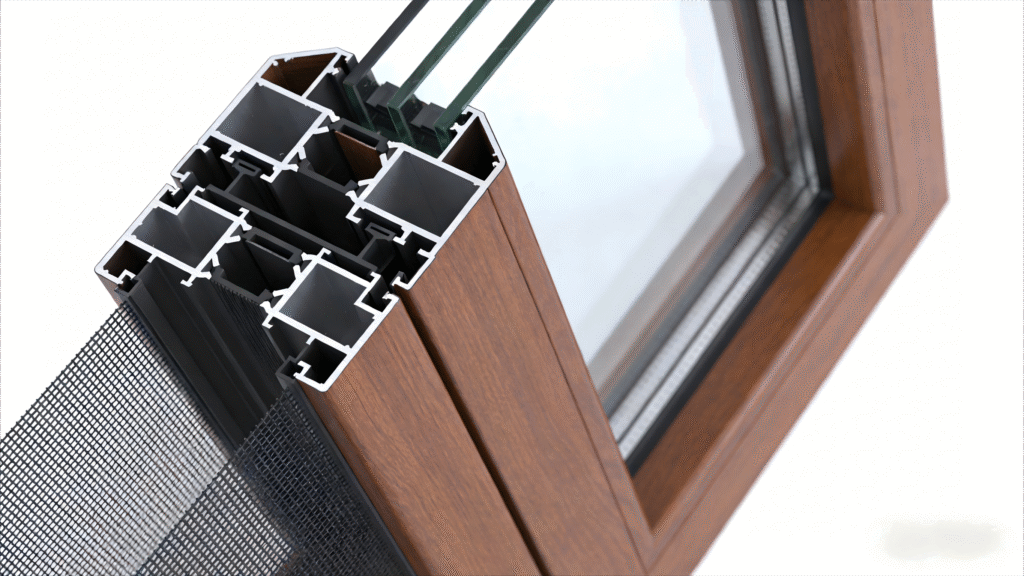
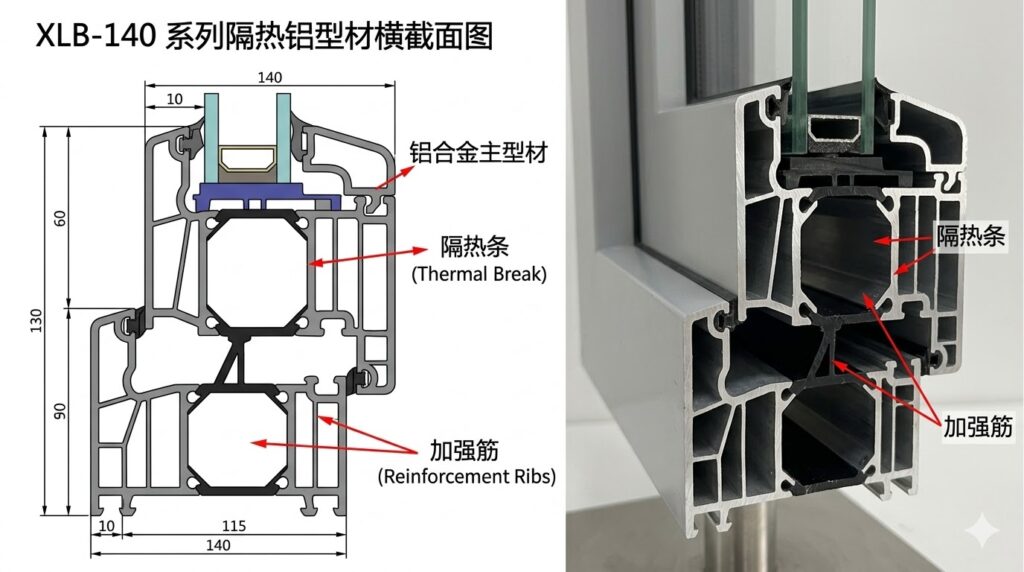
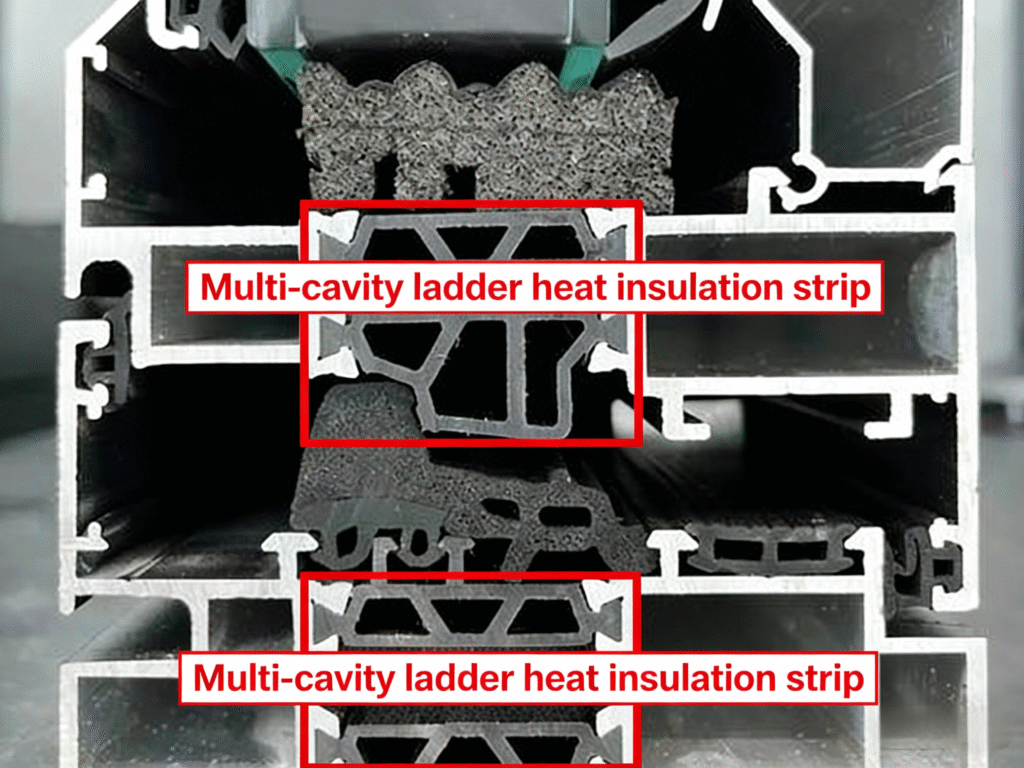
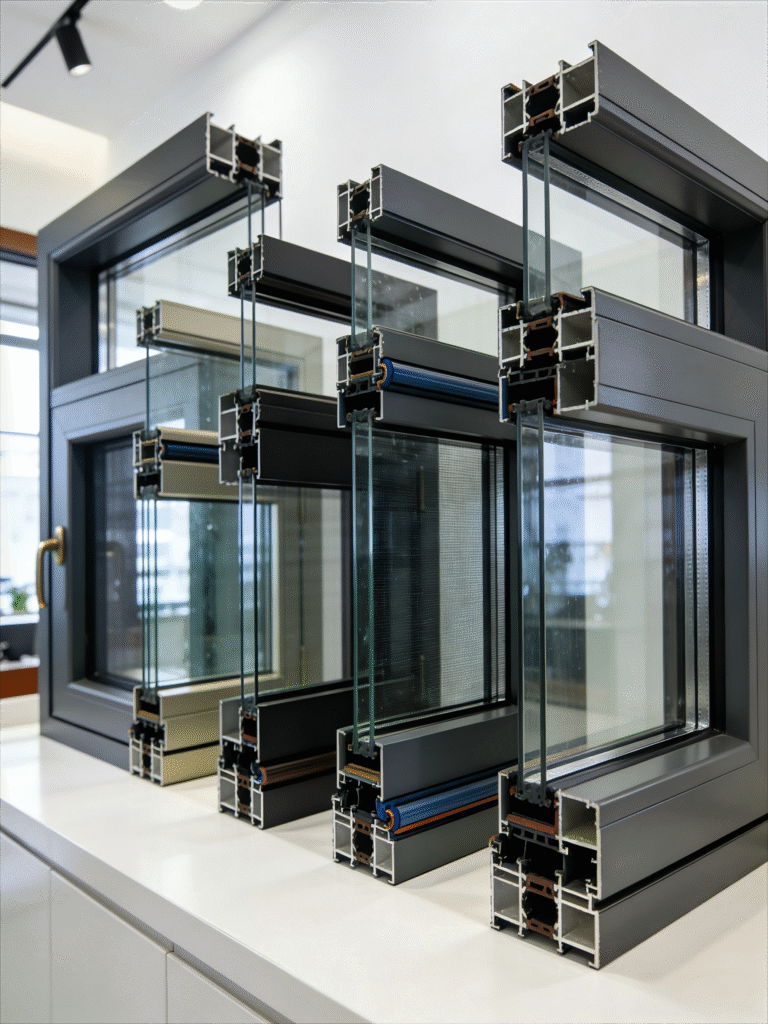
The primary function of modern fenestration is to act as a thermal barrier. Our High-Performance Aluminum Profiles center on advanced thermal break technology. We utilize high-precision polyamide (PA66) strips.

  • How it Works: Naturally, aluminum conducts heat. However, our thermal break creates a continuous barrier within the frame. This drastically reduces the thermal transmittance (U-value).
  • The Result: Consequently, this design minimizes energy loss. It effectively prevents condensation and maintains stable indoor temperatures. Ultimately, this directly reduces HVAC costs for building owners.

2.Achieving Acoustic Comfort: Multi-Seal Design

Urban noise demands effective solutions. Moreover, quiet interiors are essential for comfort. Our profiles tackle this through a multi-chamber structure.

These internal chambers disrupt sound waves. In addition, we incorporate multiple durable EPDM rubber seals at critical meeting points. As a result, this combination creates an effective barrier against external noise. Whether for an office or a home, our systems ensure peace and quiet.

3. Built for Security: Robust Hardware Integration

We view safety as integral, not an add-on. Therefore, we design our systems for maximum security through material strength and integration.

  • Structural Integrity: We select high-grade alloys for inherent strength.
  • Hardware Integration: Furthermore, we engineer profiles to integrate seamlessly with multi-point locking systems.
  • Reinforced Design: We reinforce key areas. This securely houses heavy-duty hardware for long-term reliability.

4. Sustainability and Green Building

Beyond performance, sustainability is crucial. High-Performance Aluminum Profiles play a key role in green architecture. Aluminum is fully recyclable. Additionally, the energy efficiency of our thermal break systems contributes to lower carbon footprints.

For instance, projects aiming for certifications like LEED or BREEAM often specify our profiles. By choosing AlloyPro, you support environmentally responsible construction practices.

Conclusion: Performance as Standard

At AlloyPro, we measure true quality by performance. Our solutions deliver lasting value. They lower energy costs, enhance comfort, and provide reliable security.

Ready to specify High-Performance Aluminum Profiles for your next build? Contact our technical team today to discuss your project needs.

How Aluminum Die Optimization Maximizes Material Yield

In aluminum extrusion, material cost represents a significant portion of the total expense. Therefore, improving utilization is crucial for reducing costs. Aluminum Die Optimization plays a central role in this effort. Through targeted improvements, manufacturers can effectively minimize scrap. This directly enhances output and sustainability for AlloyPro clients.

1. Leveraging Simulation for Aluminum Die Optimization

Modern die design begins with computer simulation. We use specialized software to simulate metal flow before manufacturing. This virtual testing is a key part of Aluminum Die Optimization. It allows us to identify issues like uneven flow speed.

Modern die design begins with computer simulation. We use specialized software to simulate metal flow before manufacturing. This virtual testing is a key part of Aluminum Die Optimization. It allows us to identify issues like uneven flow speed.

2. Bearing and Port Design in Aluminum Die Optimization

The design of the bearing and port holes is critical for efficiency. In our Aluminum Die Optimization process, we strategically adjust the bearing length. This controls metal flow speed uniformly.

Additionally, we optimize the port holes to reduce resistance. This optimization lowers the required extrusion pressure. A smoother flow not only saves energy but also reduces wear. More importantly, it prevents defects like tears, directly leading to higher quality output.

3. Implementing High-Strength Coatings for Longevity

Die longevity directly impacts material consistency. We apply advanced surface coatings, such as nitriding or PVD, to the dies. This is a vital step in Aluminum Die Optimization. These coatings dramatically increase surface hardness.

A harder die maintains its precise shape longer. This means the first extrusion and the ten-thousandth one have identical accuracy. Furthermore, a well-protected die resists adhesion. This reduces downtime for cleaning and minimizes scrap during start-ups.

Conclusion

In summary, Aluminum Die Optimization is a systematic approach. It combines simulation, precision design, and surface engineering. It transforms the die into a vital component for efficiency.

By investing in these optimizations, AlloyPro achieves a substantial increase in material yield. This translates to cost savings and reliable, high-quality aluminum profiles for our clients.

What Are Genuine System Windows? 5 Core Technical Secrets

For architects and homeowners, the term “System Windows” is everywhere. However, not every window meets the engineering standard. So, what defines Genuine System Windows? Unlike basic assembled windows, a true system is a fully integrated unit. Every component is designed to work together. This integration guarantees superior performance. Let’s explore the 5 essential technical indicators that separate AlloyPro high-performance windows from the rest.

1. Air Tightness in Genuine System Windows

Firstly, air tightness measures how much air leaks through closed joints. We express this with air permeability ratings. Genuine System Windows achieve high ratings through precision-engineered locking hardware.

Additionally, they use continuous seals between the sash and frame. This design dramatically reduces unwanted drafts. Consequently, it enhances indoor comfort and lowers energy bills by minimizing heat loss.

2. Water Tightness: A Mark of Genuine System Windows

Water tightness indicates resistance to water penetration under rain. Manufacturers test this rigorously. Genuine System Windows excel here due to a sophisticated drainage pathway within the frame.

Additionally, they feature precisely placed barriers that channel water outward. This is absolutely critical for the long-term durability of your building’s structure.

3. Wind Load Resistance for Strength

This indicator shows ability to withstand strong wind pressure without deforming. It is vital for safety in high-rise locations. High-performance Genuine System Windows derive their strength from reinforced profile designs.

Furthermore, they use robust corner connections. These features ensure the window remains stable and fully operational even during severe storms.

4. Thermal Insulation in Genuine System Windows

The thermal insulation performance (Uw value) tells you how well the window prevents heat transfer. A lower Uw value means better insulation. Genuine System Windows achieve excellent Uw values through combined features.

These include thermal barrier technology and multiple sealing layers. This holistic approach creates a powerful barrier against outdoor temperatures.

5. Acoustic Insulation: Quiet Genuine System Windows

Finally, acoustic insulation measures sound blocking (Rw value). Premium Genuine System Windows are engineered for superior acoustic performance.

They achieve this through specially designed profile chambers and thick glass panes. This makes them an ideal solution for buildings near busy streets or urban centers.

Conclusion: Look Beyond the Label

In summary, Genuine System Windows are defined by certified performance. When evaluating options, always ask for official test reports.

True high-performance windows from specialized manufacturers like AlloyPro transparently provide this data. They represent a long-term investment in your property’s comfort and value.

Scroll to Top