Multi-Chamber vs. Single-Chamber: Does Structure Enhance Insulation?
Structural Comparison of Aluminum Window Sections
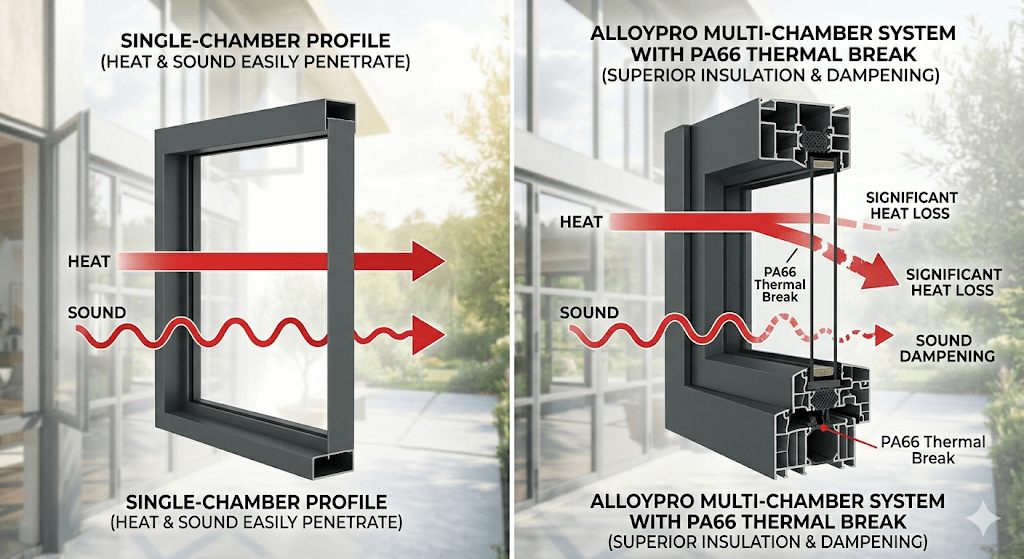
The fundamental difference lies in how air and energy move within the frame. A single-chamber design features one large open cavity. While it provides basic structural support and is cost-effective for simple applications, it allows heat and sound waves to pass through the metal profile with minimal resistance.
In contrast, multi-chamber Aluminum Window Sections utilize internal dividers to create a series of isolated air pockets. These chambers act as a natural buffer, slowing down thermal conduction. These internal ribs also provide additional “stiffness” to the profile, ensuring the frame remains stable under high wind pressure and physical stress.
Thermal Performance of Aluminum Window Sections
Aluminum is a natural conductor of heat. In a single-chamber approach, the large void does little to stop thermal transfer. High-performance Aluminum Window Sections solve this by combining a “thermal break” (a non-conductive barrier) with a multi-chamber geometry.
This combination effectively “traps” still air within the multiple small chambers. Since still air is an excellent insulator, this design significantly reduces the U-value of the window frame. For large-scale projects, this structural choice is the primary driver behind reduced electricity consumption and improved indoor climate control.
Acoustic Comfort: The “Sound Trap” Effect
Beyond temperature, the internal structure impacts urban noise reduction. A hollow, single-chamber frame can act like a drum, vibrating and potentially amplifying external noise.
Multi-chamber Aluminum Window Sections disrupt these sound vibrations through their reinforced internal walls. As noise attempts to travel through the frame, the sound waves hit multiple dividers, each reflecting and absorbing different frequencies. This “sound trap” effect provides a superior shield against traffic and construction noise, making it the standard for high-end residential and commercial interiors.
Conclusion: Engineering Success with AlloyPro
The choice between multi-chamber and single-chamber structures ultimately determines the longevity and comfort of a building. While single-chamber sections may suffice for basic needs, the next generation of architectural standards demands the precision of multi-chamber engineering.
As a specialist in high-performance building solutions, AlloyPro provides advanced Aluminum Window Sections from our manufacturing base in Guangdong. We combine rigorous structural testing with precision extrusion technology to ensure every profile delivers maximum insulation and durability. AlloyPro’s multi-chamber systems offer the reliable structural integrity your architectural projects deserve.