






Aluminium Window Maintenance 5 Simple Steps For Long Life
These five maintenance tasks help keep aluminium windows clean and operating smoothly. Follow the window, finish and hardware manufacturers’ instructions; frequency depends on exposure and use.
Step 1 – Clean Frames for Better Aluminium Window Maintenance
Dirt builds up on frames over time. It can scratch the protective coating and expose the metal to moisture. That is why aluminium window maintenance always starts with cleaning.
Use a soft cloth, clean water and an approved mild detergent. Follow the finish supplier’s cleaning schedule, with more frequent attention in salty or polluted locations. Avoid abrasive pads and unapproved chemicals.
Mix a few drops of soap with warm water. Wipe the frames gently from top to bottom. Rinse with clean water and wipe again. Dry completely with a soft cloth. Do not clean in direct sunlight – it leaves streaks. This simple cleaning routine is the foundation of good aluminium window maintenance.
For stubborn deposits, use only a cleaner approved for the particular finish, seals and glazing.
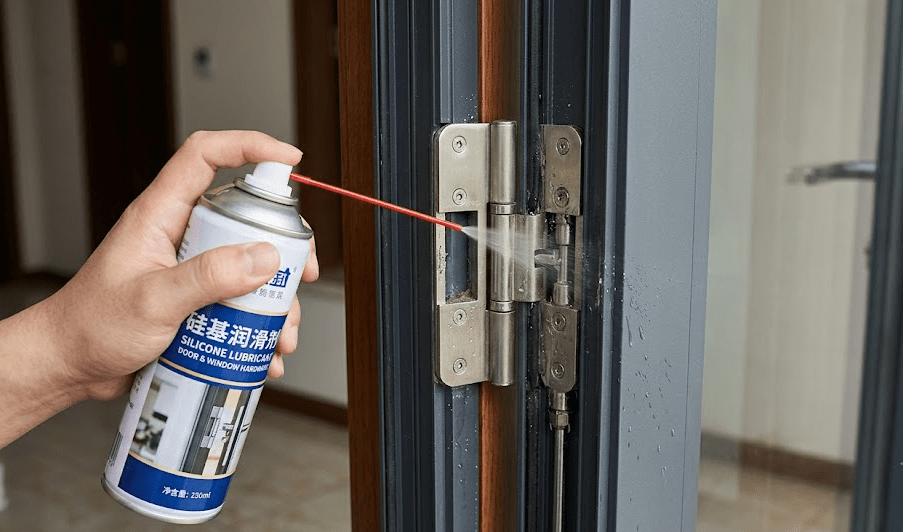
Step 2 – Lubricate Hinges as Part of Aluminium Window Maintenance
Hinges and rollers can become stiff over time. You may hear a squeak or feel resistance. Regular aluminium window maintenance includes proper lubrication.
Lubricate only the points identified by the hardware manufacturer, using the specified product. Some rollers or tracks require cleaning rather than lubricant; do not spray all components indiscriminately.
Adding this step to your yearly aluminium window maintenance routine keeps moving parts smooth and quiet.
Step 3 – Clear Tracks and Drainage Holes for Complete Aluminium Window Maintenance
Sliding windows and doors collect dust and debris in the bottom tracks. Clogged tracks make sliding difficult. Good aluminium window maintenance also requires clean tracks and drainage holes.
Remove loose track debris with a soft brush or vacuum and wipe accessible surfaces. Keep drainage openings clear without damaging seals or forcing debris into concealed channels. Follow the system instructions for checking drainage.
Clean tracks reduce avoidable friction. Clear drainage openings help water leave the frame as intended.
Step 4 – Inspect Seals to Complete Your Aluminium Window Maintenance
Rubber seals around your windows keep out wind, rain, dust, and noise. They also save energy by stopping drafts. Inspecting these seals is a critical part of aluminium window maintenance.
Inspect seals for damage, displacement or hardening. Use a replacement profile specified for the system; generic weather stripping or rubber conditioners may be incompatible. Refer damaged glazing seals to an appropriate installer.
Record damaged seals and arrange suitable repairs. Inspection does not establish a quantified air or water rating.
Step 5 – Consider Your Climate for Smart Aluminium Window Maintenance
Your local environment changes how often you need to perform aluminium window maintenance. A home in dry Arizona needs a different schedule than a beachfront villa in Florida.
- Coastal areas: follow the finish supplier’s coastal cleaning instructions and remove salt deposits regularly.
- Urban areas: remove pollution deposits before they accumulate, following the approved cleaning method.
- Dusty climates: inspect tracks and moving parts more frequently and use only approved lubricants.
- Cold climates: do not force a frozen window; inspect drainage and seals after conditions allow safe operation.
- During construction: use compatible temporary protection and remove it within the supplier’s stated time limits.
Adapt the schedule to exposure and the product instructions. Maintenance can support serviceability, but it does not establish a fixed increase in lifespan.
Conclusion – Follow These Steps for Reliable Aluminium Window Maintenance
Here are the five steps again:
- Clean frames with approved mild cleaning materials.
- Maintain hardware at the specified points and intervals.
- Keep accessible tracks and drainage openings clear.
- Inspect seals and use system-compatible replacements.
- Consider your climate and adjust frequency.
Keep a maintenance record and seek help for damaged glazing, inaccessible components or persistent operating faults.
Contact AlloyPro with the product details if you need the applicable care information. No fixed 20-year life is implied by this routine.
For related product and planning information, see How to: Cleaning Sliding Window Tracks for Smooth Operation and 130 compression-seal sliding windows.
Send AlloyPro your project requirements, including location, drawings, quantities and the performance documents you need.