







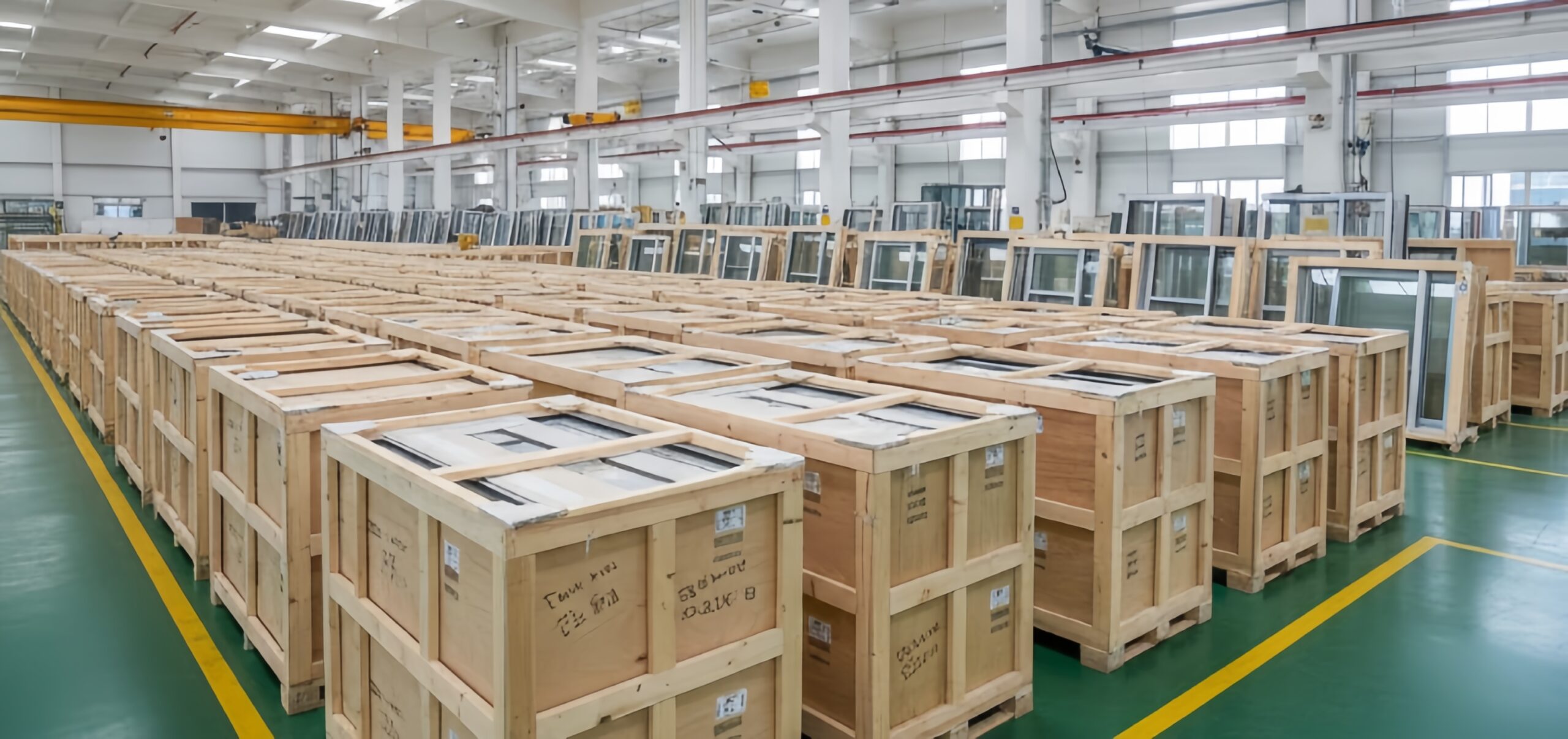
Export Standard Packing for Premium Aluminum Windows Pro
International shipping exposes windows to handling, vibration and moisture risks. Agree a packing specification suited to the product and route; packing reduces risk but does not guarantee damage-free arrival.
Why Export Standard Packing Matters for Your Supply Chain
Define supports, separation, lifting points, restraint and inspection records before dispatch.
Phase 1: Surface Protection and Corner Guarding
Use protective film compatible with the finish and remove it within the supplier’s stated period.
Protect vulnerable corners and prevent frame-to-frame contact without loading glass or hardware incorrectly.
Phase 2: Multi-Layer Wrapping for Moisture Control
Select cushioning and moisture-management measures for the product and shipment conditions.
Wrapping must be compatible with finishes and avoid trapping harmful moisture. Agree the method rather than assuming stretch film is a complete moisture barrier.
Phase 3: Heavy-Duty Crate Construction
Confirm timber-packaging requirements for the destination. Processed wood such as plywood may be exempt from ISPM 15 treatment, but any solid-wood components and other import requirements still need checking.

Design crates and internal separation for the product weight and handling arrangement. Confirm restraint without transferring unsuitable loads to glazing.
Phase 4: Strategic Container Loading
Agree container restraint, lifting marks and dispatch photographs with the shipper. Packaging and loading responsibilities should be recorded for the order.
For related product and planning information, see How to Protect Aluminum Profile Shipment: A Professional Guide and Factory Direct Windows Guide: How to Source for Your Project.
Send AlloyPro your project requirements, including location, drawings, quantities and the performance documents you need.