




The Ultimate Guide to Industrial Aluminum Profile Selection
Step 1: Define Your Application Requirements
First, you must clearly understand what you need. Before starting your Industrial Aluminum Profile Selection, ask yourself these questions:
- Function: Is it for structural framing, a safety guard, or a conveyor system?
- Load: Will the profile bear heavy static loads or dynamic forces? Specifically, this influences the profile size and wall thickness.
- Environment: Consider exposure to chemicals, moisture, or heat. This affects the choice of alloy and surface treatment.
Clearly defining these points upfront saves time. Also, it prevents costly mistakes later in the process.
Step 2: Understand Key Profile Specifications
Now, let’s break down the technical details. To master Industrial Aluminum Profile Selection, focus on these three core parameters:
- Alloy Type (6061 vs 6063): This determines mechanical properties. 6061-T6 is best for high-stress industrial use. It offers excellent strength. In contrast, 6063-T5 is slightly softer. It has a superior surface finish. Thus, it is perfect for aesthetic applications where anodizing quality is key.
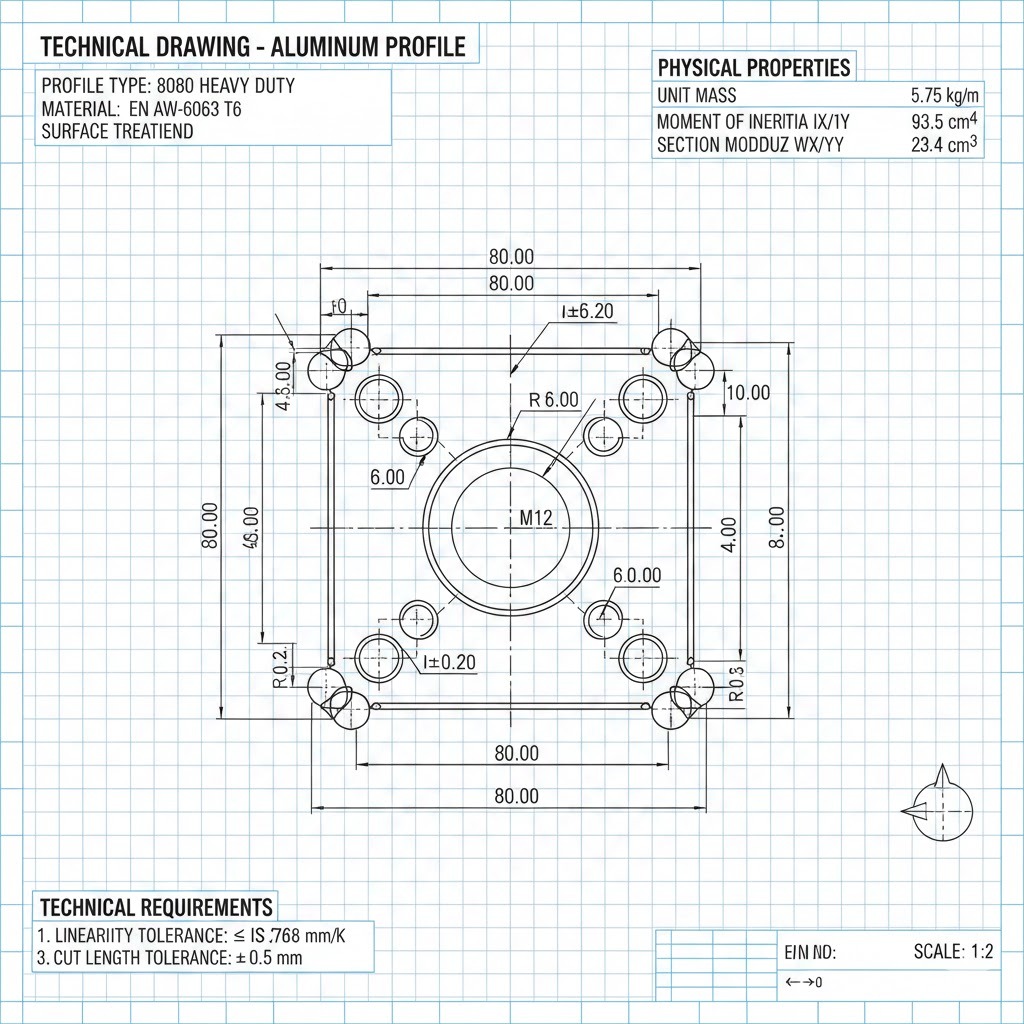
- Profile Series: The series number (e.g., 20, 40, 80) refers to dimensions. Larger series provide higher load-bearing capacity. For example, an 8080 profile is necessary for heavy machinery. Meanwhile, a 2020 profile suits light frames.
- Surface Finish: This protects the aluminum. Anodizing creates a hard, corrosion-resistant layer. Powder coating offers a durable color finish against scratches.
Step 3: Evaluate Supplier Capability
Finding a supplier is as important as the product itself. Furthermore, you should assess them on several levels:
Technical Support: Can they provide CAD drawings and load calculations? A reliable supplier like Guangdong Aolaibo Aluminum offers professional engineering support.
Quality Assurance: Do they conduct tensile strength tests? ISO 9001 certifications are a good indicator of quality.
Logistics: Consistent supply and on-time delivery keep your projects on schedule.
Step 4: Optimize for Cost and Assembly
Finally, consider the total project cost. Good Industrial Aluminum Profile Selection looks beyond the price per meter.
- Connection System: The choice of brackets and connectors impacts assembly time. A good supplier offers a complete system.
- Design for Manufacturability: Using standard profiles reduces costs. However, for complex needs, custom extrusion capability is invaluable.
Your Next Step
Selecting the right material involves a balance of specs and economics. By following this structured approach, you can navigate the process confidently.
Are you working on a specific project? Guangdong Aolaibo Aluminum specializes in high-strength Industrial Aluminum Profile Selection. We provide complete custom fabrication solutions. We combine quality materials with engineering support. Consequently, we bring your designs to life efficiently.
Contact us today for a free consultation or to request a quote. Let our expertise be the foundation of your next successful build.