







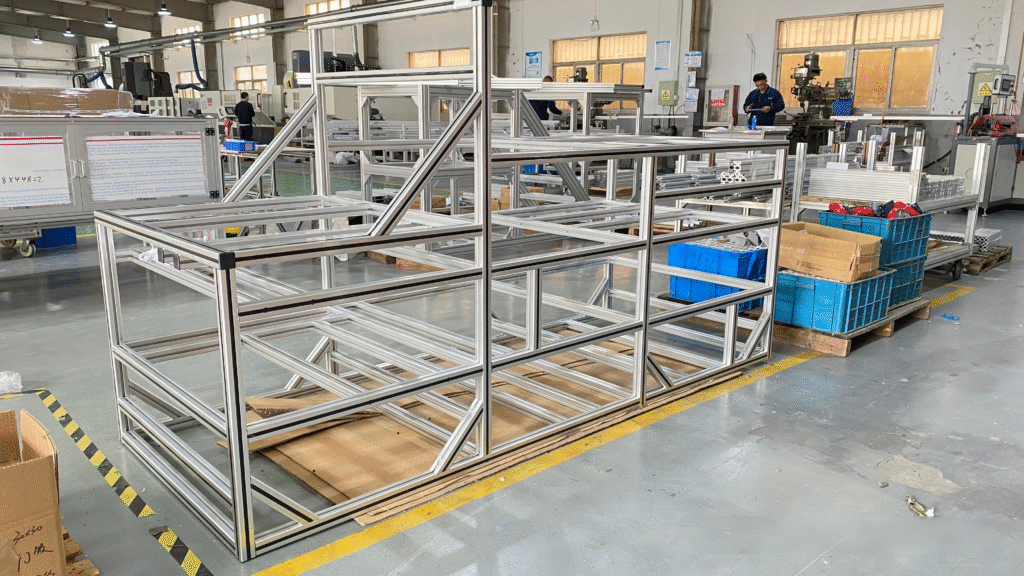
Production Line Aluminum Frames: 5 Heavy Duty Design Secrets
Production-line aluminium frames need a defined load case and suitable connections. These five design checks cover load, modularity, precision, vibration and safety.
Secret 1: Load Capacity for Production Line Aluminum Frames
First, you must evaluate the load requirements. Automated lines often carry heavy machinery, so strength is crucial. Therefore, we recommend using 6061 or 6063 aluminum alloys. These offer an excellent strength-to-weight ratio.
Calculate static and dynamic loads and the required deflection limits. Select the complete section-and-connector system using the applicable design requirements.
Secret 2: Implement Modular Design for Flexibility
Modular design is a growing trend. Using standard aluminum profiles allows for quick assembly. Consequently, you can adjust or expand your frame easily. This approach saves time and reduces long-term costs.
Modular profiles can allow later changes, provided the revised frame and connections are checked for the new loads.
Secret 3: Ensure Precision and Accuracy
Precision directly impacts smooth operation. When assembling Production Line Aluminum Frames, you must maintain tight tolerances. Even small errors can cause vibration.
Specify dimensional tolerances and inspect critical interfaces. Do not assume a case study proves the performance of a different frame.
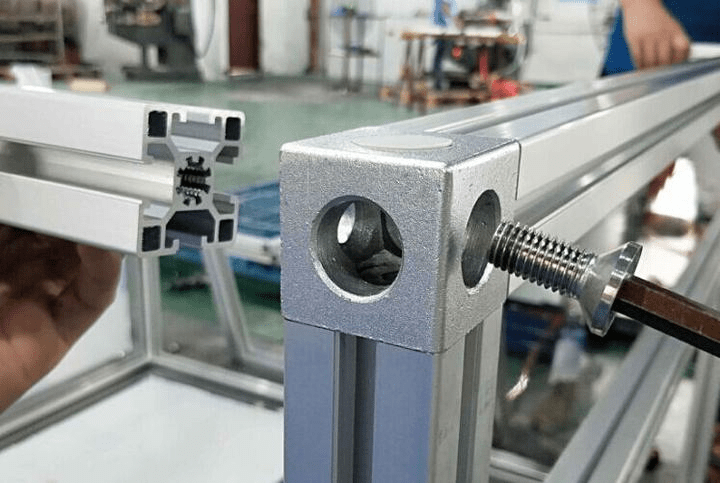
Secret 4: Minimize Vibration for Stability
Automated equipment generates vibration. However, this can affect frame longevity. To improve stability, incorporate damping elements into your Production Line Aluminum Frames.
Design connections and bracing for the loads and vibration. Tightening alone is not a substitute for a suitable joint design.
Secret 5: Prioritize Safety Standards
Safety is the top priority in industrial design. Frames must meet international standards like ISO or OSHA. This protects both workers and equipment.
Check guarding, edges, stability and other applicable machine-safety requirements. A profile or rounded edge alone does not make the assembled production line compliant.
Conclusion
In summary, focusing on load, modularity, and precision will help you build efficient Production Line Aluminum Frames. These considerations extend your production line’s lifespan.
Send AlloyPro your drawings and requirements to clarify the proposed scope.
For related product and planning information, see Modular Aluminum Profile Systems: The Backbone of Agile Smart Factories and Aluminum profile for automation: 5 Key Factors for Stability.
Send AlloyPro your project requirements, including location, drawings, quantities and the performance documents you need.