






Understand condensation on windows by reviewing frames, glass and room conditions. Compare Alloy Pro sliding and tilt-and-turn options alongside a practical ventilation plan.
Condensation on windows is a useful reminder to review the frame, glass and room conditions together. For a new build or renovation, specifying a better window should go alongside a practical plan for managing moisture and ventilation.
Australia’s Your Home guidance explains how surface temperature and moisture in the air interact. Its advice is relevant to window buyers in different climates: a frame choice alone cannot answer every question about condensation in a finished room.
Start with the location of the moisture
Record which surface is wet, when it happens and whether it follows cold weather, cooking, showering or a change in air-conditioning use. Photographs and a note of indoor conditions give the project team a better starting point than the description “the window is wet”.
Ask a qualified building professional to investigate recurring moisture or possible water entry. Establishing the cause should come before choosing a replacement product or changing the installation detail.
What thermally improved aluminium frames can change
Your Home identifies windows and doors as potential thermal bridges. It notes that thermally broken aluminium framing can reduce condensation on frames, while improved glazing and insulation can help keep internal surfaces warmer. Those measures reduce risk; they do not establish that a particular window will remain dry under every indoor and outdoor condition.
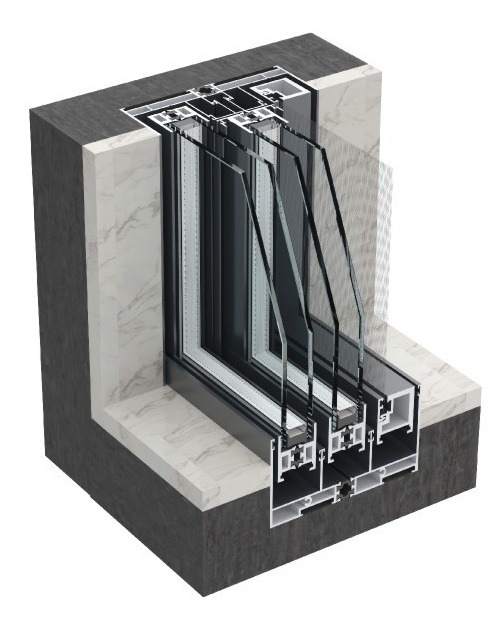
For an aluminium window quotation, ask for the proposed frame, glazing build-up and relevant whole-window thermal data. Keep the same opening sizes and glazing assumptions when comparing alternatives. A frame-section illustration helps identify the assembly; it does not establish a condensation rating.
Plan intentional ventilation alongside airtightness
Your Home distinguishes planned ventilation from unintended air leakage. Sealing gaps and managing fresh air are complementary tasks. Extracting moisture at kitchens and bathrooms, with exhaust directed outdoors, can form part of the building’s ventilation strategy.
Opening windows depends on occupants, weather and practical constraints. Where noise, security or outdoor conditions limit their use, ask the responsible designer whether mechanical ventilation is needed. Window selection should fit that wider plan.
Two Alloy Pro opening arrangements to discuss
Alloy Pro’s 126 thermal break aluminium sliding windows provide a sliding arrangement for projects where an inward-swinging sash would affect the room layout. Confirm the panel arrangement and the usable opening with any proposed screens. The overall frame width is not the same as the open area available for airflow.
Kami thermally broken aluminium tilt-and-turn windows offer another opening approach. Include inward clearance, furniture positions and the required operating arrangement in the brief. Ask which hardware, screens and opening restrictions suit the particular order.
Neither opening style is a stand-alone solution to room moisture. Compare the complete window specification and the way it will be used.
A short checklist before requesting quotations
Room conditions: State the project location, room use and any observed moisture pattern.
Window assembly: Provide opening sizes, frame and glazing requirements, and the evidence requested.
Ventilation plan: Identify opening clearances, screens, exhaust provision and the designer’s strategy.
For the heat-transfer part of the specification, read our guide to window U-values. Use that information alongside the moisture assessment rather than treating one number as the complete answer.
Discuss your window project with Alloy Pro
Send your drawings, project location, opening dimensions and quantities. Tell us whether you are considering sliding or tilt-and-turn windows, and include the glazing requirements and any moisture concerns already identified by your project team.